
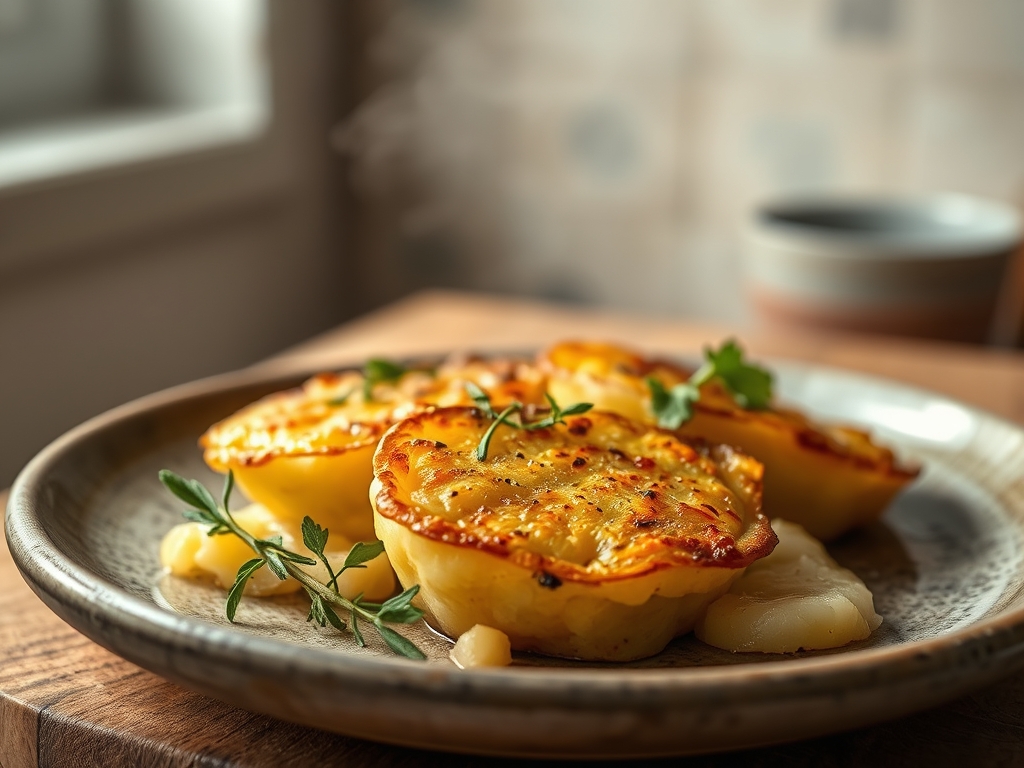
Imagine the steam rising from a heavy ceramic dish; it carries the scent of roasted garlic and the earthy, sweet perfume of slow-simmered Yukon Golds. Most people think you need a mountain of cheddar to achieve that velvety, luxurious mouthfeel, but the best scalloped potato recipes without cheese rely on the magic of starch suspension and fat emulsification instead. We are talking about a dish so creamy it defies logic; a golden, bubbling masterpiece that proves plant-based fats can carry flavor better than any dairy ever could. If you have been searching for that perfect side dish that satisfies the soul without the heavy lactose lag, you have arrived. We are going to harness the power of the Maillard reaction and the structural integrity of the potato itself to create a centerpiece that is as sophisticated as it is comforting. Grab your favorite apron and a sharp knife; we are about to turn a humble tuber into a culinary triumph that will have your guests questioning everything they thought they knew about comfort food.
The Gathers:
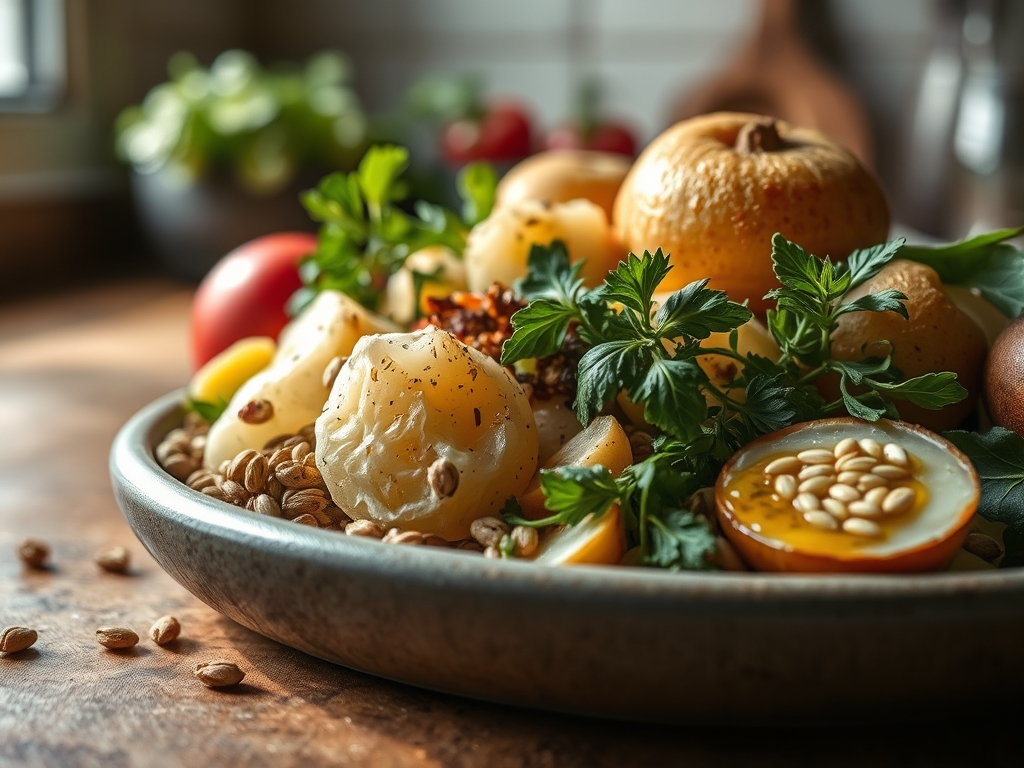
To achieve a professional-grade result, your mise-en-place must be precise. We start with three pounds of Yukon Gold potatoes, chosen specifically for their medium-starch content and waxy finish which prevents them from disintegrating into mush. You will also need a high-quality fat source; I recommend a combination of extra virgin olive oil for its polyphenols and a full-fat coconut milk or cashew cream to provide a viscous, rich base.
For the aromatics, gather four large cloves of garlic, a bunch of fresh thyme, and two medium shallots. The secret to the "cheesy" profile in scalloped potato recipes without cheese is a two-pronged attack: nutritional yeast for its nutty, piquant depth and a teaspoon of white miso paste to provide a massive hit of umami. You will also need kosher salt, freshly cracked black pepper, and a pinch of nutmeg to elevate the creaminess.
Smart Substitutions: If you are avoiding nuts, use an oat-based heavy cream. If you want a sharper bite, a teaspoon of Dijon mustard whisked into the sauce acts as an emulsifier and adds a sophisticated tang. Use a digital scale to ensure your potato-to-liquid ratio is exact; precision is the difference between a soggy mess and a perfect slice.
The Clock
Efficiency in the kitchen is all about the Chef's Flow. Expect about 20 minutes of active prep time, which includes peeling, slicing, and whisking your infusion. The actual bake time is where the transformation happens; you will need 60 to 75 minutes in a 375 degree oven.
The flow is simple: while the oven preheats, you prep your tubers. While the sauce infuses on the stove, you layer. This overlapping schedule ensures that your potatoes never sit long enough to undergo enzymatic browning. By the time the timer dings, you should have already cleaned your bench scraper and mandoline, leaving you nothing to do but wait for the carryover cooking to finish.
The Masterclass
1. The Precision Slice
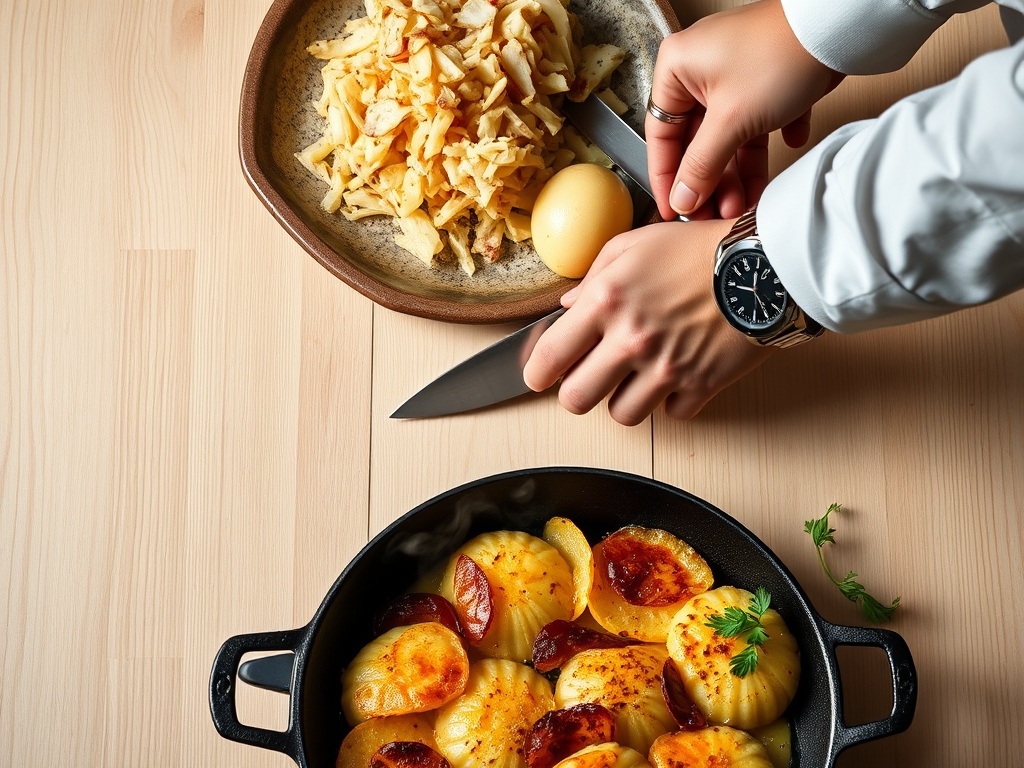
Using a mandoline slicer set to 1/8th of an inch, process your potatoes into uniform rounds. Uniformity is not just for aesthetics; it ensures every slice reaches the same level of starch gelatinization at the exact same time.
Pro Tip: Do not soak your slices in water. We need the surface starch to act as a natural thickener for the sauce. Rinsing them away would result in a thin, watery bake.
2. The Aromatic Infusion
In a saucier, combine your cream substitute, garlic, shallots, and herbs. Bring to a gentle simmer over medium-low heat. This allows the fat-soluble compounds in the aromatics to infuse into the liquid base, creating a uniform flavor profile.
Pro Tip: Use a microplane to grate your garlic directly into the liquid. This increases the surface area, releasing more allicin and creating a more intense, integrated flavor than chopped garlic.
3. The Umami Build
Whisk in your nutritional yeast, miso, salt, and pepper. Use a silicone whisk to ensure the miso fully dissolves into the emulsion. The liquid should taste slightly over-seasoned at this stage; the potatoes will absorb a significant amount of salt as they cook.
Pro Tip: This is where you control the viscosity. If the sauce feels too thin, a tiny slurry of cornstarch can help, but the potato starch usually does the heavy lifting during the bake.
4. The Structural Layering
Grease your baking dish and begin shingling the potatoes. Do not just dump them in. Layering them in overlapping rows ensures that the sauce can permeate every layer while providing structural integrity so the dish can be sliced cleanly.
Pro Tip: Press down firmly on the layers every few rows. This removes air pockets and ensures the thermal energy transfers evenly through the dense stack of tubers.
5. The Thermal Bath
Pour the infused liquid over the potatoes until they are just barely submerged. Cover tightly with foil to trap the steam. This steam hydrates the starch granules, making them swell and soften before the browning stage begins.
Pro Tip: Covering the dish prevents the top layer from drying out and becoming leathery before the center is fully cooked through via conduction.
6. The Maillard Reveal
Remove the foil for the last 20 minutes of baking. This allows moisture to evaporate, concentrating the flavors and triggering the Maillard reaction on the top layer, resulting in those coveted crispy, golden-brown edges.
Pro Tip: If the top is not browning fast enough, a quick 2-minute stint under the broiler will finish the job. Watch it like a hawk to avoid carbonizing the delicate sugars in the sauce.
The Deep Dive
When we look at the macro nutrition, this version is significantly lower in saturated animal fats and cholesterol than traditional versions. By using plant-based fats, you are gaining heart-healthy monounsaturated fats while keeping the caloric density satisfying.
Dietary Swaps: For a Keto version, swap half the potatoes for sliced daikon radish or cauliflower florets. For a Gluten-Free guarantee, ensure your miso paste is labeled GF, as some brands use barley.
The Fix-It:
- Curdled Sauce: This happens if the heat is too high. Use full-fat stabilizers like cashew cream to prevent separation.
- Crunchy Potatoes: You likely sliced them too thick or pulled them too early. Check the center with a paring knife; it should slide in like butter.
- Greasy Top: If using coconut milk, some oil may render out. Simply blot with a paper towel or whisk the sauce more vigorously before pouring.
Meal Prep: To reheat, do not use the microwave; it makes the potatoes rubbery. Instead, place a slice in a heavy-bottomed skillet with a splash of water and cover. The steam will re-hydrate the starch without breaking the emulsion.
The Wrap-Up
Mastering scalloped potato recipes without cheese is like unlocking a secret level of culinary skill. You are no longer leaning on the crutch of melted dairy; you are using technique, chemistry, and flavor layering to create something truly spectacular. This dish is elegant enough for a holiday table but simple enough for a Sunday roast. It is creamy, savory, and deeply satisfying. Now, go forth and show the world that the humble potato does not need a shred of cheddar to be the star of the show!
The Kitchen Table
Can I use Russet potatoes instead of Yukon Gold?
Yes, but be careful. Russets have more starch and less moisture; they may break down into a mash-like consistency. Yukon Golds hold their shape much better for that classic sliced look in scalloped potato recipes without cheese.
How do I prevent the sauce from being too thin?
The key is the starch on the potato slices. Do not rinse them after slicing. As the dish bakes, the starch leeches into the liquid, creating a natural, velvety thickener that binds the layers together perfectly.
Can I make this dish ahead of time?
Absolutely. Bake it fully, let it cool, and refrigerate. The flavors actually deepen overnight. Reheat it in a 350 degree oven covered with foil to maintain the moisture and ensure the center is hot.
What provides the yellow color if there is no cheese?
The combination of nutritional yeast and a pinch of turmeric or the natural yellow flesh of the Yukon Gold potatoes creates that classic golden hue. It looks just as rich as any traditional dairy-laden version.