
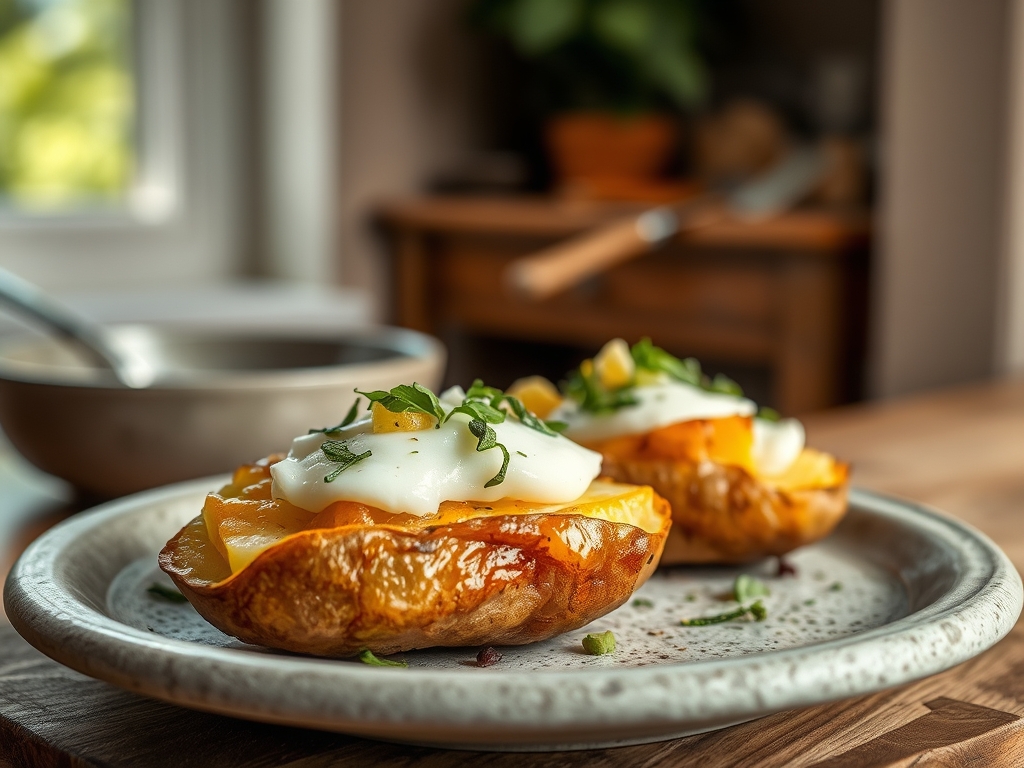
Imagine a crisp autumn evening where the scent of roasting earthiness fills your kitchen; that is the magic of the humble spud. You want that fluffy, cloud like interior and a skin so shatteringly crisp it rivals a kettle chip. Finding truly healthy baked potato recipes does not mean sacrificing the soul of comfort food; it means upgrading the chemistry.
The potato is often unfairly maligned as a simple starch. In reality, it is a complex cellular matrix waiting for the right thermal application to transform into a culinary masterpiece. We are moving beyond the heavy, grease laden toppings of the past. Instead, we are focusing on nutrient density, vibrant acids, and textures that pop. By understanding how to manipulate moisture and heat, we can turn this root vegetable into a high performance fuel that feels like an indulgence. Grab your apron and your favorite heavy bottomed skillet; we are about to redefine what a healthy dinner looks like.
The Gathers:
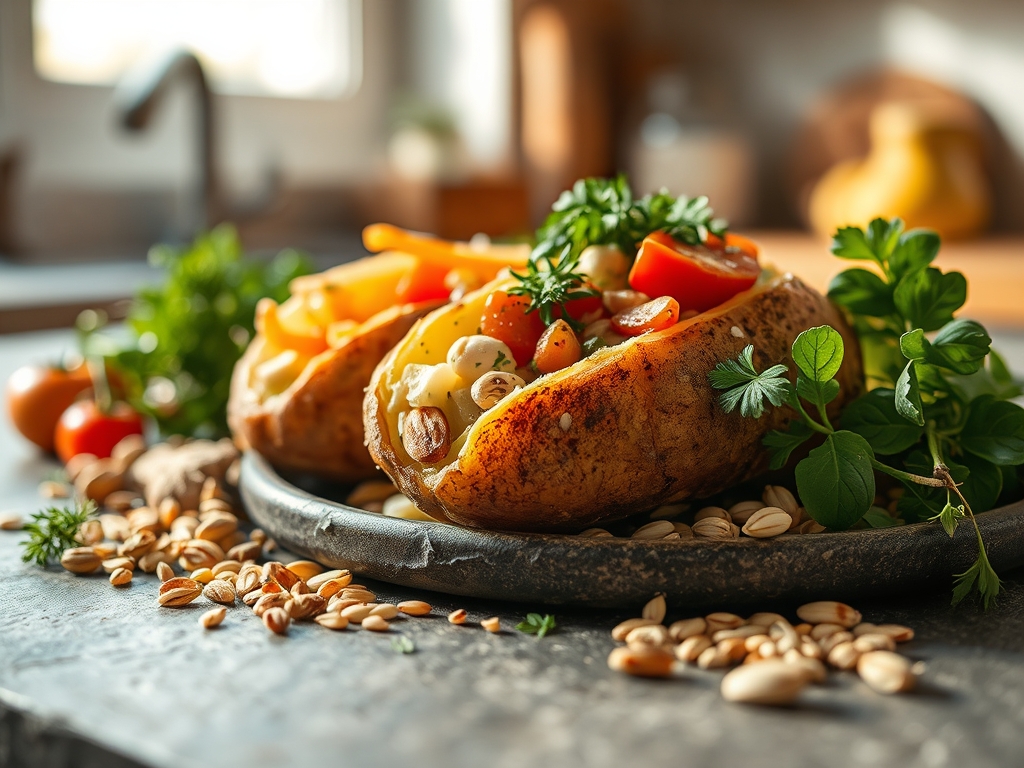
Before we fire up the oven, we must assemble our mise en place with precision. Start with your base: Russet or Idaho potatoes. These varieties are high in starch and low in moisture, which is the exact ratio required for that signature mealy texture. If you use a waxy potato like a Red Bliss, you will end up with a gummy interior because the sugar content is too high for high heat roasting.
For our smart substitutions, swap the heavy sour cream for Greek yogurt. This provides a viscous, piquant base that is packed with protein and probiotics. Instead of butter, we will utilize cold pressed extra virgin olive oil or an infused avocado oil. These fats have higher smoke points and offer heart healthy monounsaturated fats.
You will also need a collection of aromatics. Fresh chives, micro greens, and roasted garlic cloves provide intense flavor without the sodium bloat. For a "cheesy" hit without the saturated fat, nutritional yeast is your best friend. It offers a nutty, umami profile that mimics aged cheddar. Finally, keep a digital scale nearby to ensure your potatoes are uniform in size; this ensures they cook at the exact same rate, preventing one from being raw while the other is charred.
The Clock:
Mastering the "Chef's Flow" is about timing your prep so everything reaches its peak simultaneously. A standard large Russet requires 45 to 60 minutes at 400 degrees Fahrenheit. Your active prep time is only 10 minutes. Use the first 5 minutes to scrub the skins with a stiff brush to remove grit and the next 5 to prep your toppings.
While the potatoes undergo their thermal transformation, use the "dead time" to whip your yogurt or sauté your greens in a saucier. This prevents the frantic last minute scramble. If you are meal prepping, remember that potatoes are dense; they hold heat for a long time due to their thermal mass. This allows you a 15 minute window of "carryover cooking" where the internal temperature continues to rise even after they leave the heat.
The Masterclass:
1. The Surface Preparation
Scrub your potatoes under cold running water to remove any residual soil. Pat them bone dry with a lint free towel. Moisture is the enemy of a crisp crust. Use a fork to prick the skin about six times. This creates "steam vents" that prevent the potato from exploding as the internal water turns to vapor.
Pro Tip: This step prevents the skin from becoming tough and leathery. By allowing steam to escape, you ensure the internal starch granules swell and separate rather than becoming a dense, gluey mass.
2. The Brining Phase
Lightly coat the exterior with a thin film of olive oil and a generous dusting of kosher salt. Do not wrap them in foil. Foil traps moisture and steams the potato, resulting in a soggy skin. Place them directly on the middle oven rack or on a wire rack set over a baking sheet.
Pro Tip: This uses the principle of osmosis. The salt draws out surface moisture, allowing the Maillard reaction to occur more efficiently, which results in that savory, browned flavor profile on the skin.
3. The Thermal Blast
Roast at 400 degrees Fahrenheit until the internal temperature reaches 205 degrees. Use a probe thermometer to be certain. You are looking for a skin that feels like parchment paper and an interior that gives way easily when squeezed with tongs.
Pro Tip: Reaching 205 degrees is the "sweet spot" where the starch granules fully gelatinize. If you pull them out at 185 degrees, the center will feel waxy and undercooked.
4. The Aeration Technique
As soon as they come out, use a sharp paring knife to slice a long slit down the center. Use a clean kitchen towel to "pop" the ends toward the middle. Immediately use a fork to fluff the white interior, breaking up the large clumps.
Pro Tip: This is called aeration. By fluffing the potato while it is piping hot, you allow steam to escape. If you wait, that steam will condense back into water, making your potato heavy and wet.
5. The Infusion
While the potato is still steaming, add your "fat" component. Whether it is a drizzle of infused oil or a dollop of Greek yogurt, do it now. The heat will help the fat emulsify with the starch, creating a creamy mouthfeel without the need for excessive calories.
Pro Tip: Adding fats while the starch is hot allows for better distribution. The heat lowers the viscosity of the oil, letting it penetrate deep into the fluffed layers.
6. The Flavor Layering
Now, layer your "hacks." Try a Mediterranean twist with sun dried tomatoes and olives, or a Tex Mex version with black beans and lime. Use a microplane to zest fresh lemon or lime over the top for a bright, acidic finish that cuts through the starch.
Pro Tip: Acid acts as a flavor enhancer. A small amount of citrus juice or vinegar can make the potato taste "salted" even if you are watching your sodium intake.
7. The Final Garnish
Top with fresh herbs and a crunch element like toasted pepitas or hemp seeds. This adds textural contrast, which is the key to a satisfying meal. Serve immediately while the temperature gradient between the cool yogurt and hot potato is at its peak.
Pro Tip: Textural contrast triggers sensory specific satiety. By having "crunchy" and "creamy" together, your brain registers the meal as more satisfying, preventing overeating.
The Deep Dive:
When we look at the macro nutrition of a medium potato, we see a powerhouse: roughly 160 calories, 4 grams of fiber, and more potassium than a banana. By keeping the skin on, you preserve the majority of the iron and Vitamin C. For those on specific diets, these healthy baked potato recipes are incredibly flexible. Vegan diners can swap yogurt for a cashew cream or silken tofu whip. For a lower carb "keto" vibe, you can apply these same roasting techniques to a large head of cauliflower.
The Fix-It:
- Soggy Skin: This happens if you used foil or didn't dry the potato. Fix it by popping the halved potato under the broiler for 2 minutes to dehydrate the surface.
- Gray Interior: This is caused by enzymatic browning if the potato was cut too early. Always cut and fluff immediately before serving.
- Hard Center: Your oven might have cold spots. Always use a thermometer and ensure you are hitting that 205 degree internal mark.
Meal Prep:
To reheat a baked potato and maintain "day one" quality, avoid the microwave. The microwave agitates water molecules and turns the starch gummy. Instead, use an air fryer at 350 degrees for 5 minutes. This re-crisps the skin while gently warming the core.
The Wrap-Up:
You are now officially a potato whisperer. By combining the physics of steam with the chemistry of the Maillard reaction, you have turned a basic pantry staple into a gourmet, health conscious feast. Remember that the best healthy baked potato recipes are the ones where you play with flavor and texture. Don't be afraid to experiment with your toppings; just keep the science of the "fluff" in mind. Now, go forth and roast with confidence!
The Kitchen Table:
How do I get the skin extra crispy?
Skip the foil and salt the skin heavily. The salt draws out moisture through osmosis, while the dry oven air dehydrates the surface. This allows the skin to crisp up into a savory, cracker like texture during the roasting process.
Are baked potatoes actually healthy?
Yes! They are naturally fat free, gluten free, and loaded with potassium and fiber. The health factor depends on the toppings. By using Greek yogurt, fresh herbs, and healthy fats like olive oil, you maintain a high nutrient density.
Why is my baked potato gummy?
Gumminess usually occurs if you use a waxy potato or if you don't fluff the interior immediately after baking. Trapped steam condenses back into water, which hydrates the starch granules into a sticky, glue like consistency instead of a light fluff.
Can I bake potatoes at a lower temperature?
You can, but you will lose the crispy skin. Lower temperatures (like 325 degrees) result in a softer, more steamed exterior. For the best results, stay between 400 and 425 degrees to trigger the Maillard reaction for maximum flavor.