
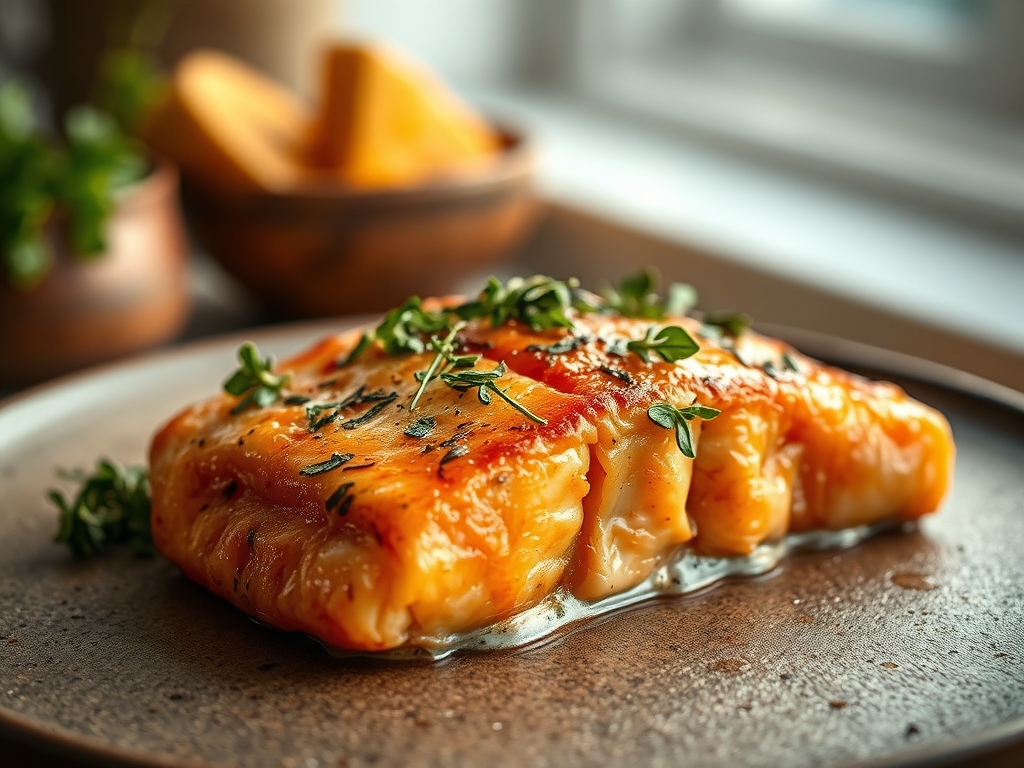
Imagine the sound of a cold, heavy-bottomed skillet meeting a flame; it is that sharp, expectant hiss that signals the start of something transformative. You are standing in your kitchen, the air beginning to carry the scent of salt and searing fats, ready to turn a simple fillet into a masterpiece of muscle-building fuel. When we talk about high protein salmon recipes, we are not just talking about sustenance; we are discussing the intersection of elite performance and culinary indulgence. Salmon is the crown jewel of functional fats, packed with Omega-3 fatty acids that dampen systemic inflammation while providing a dense, bioavailable protein punch. This is the meal that bridges the gap between a grueling deadlift session and a refined dinner party. We are going for that perfect, glass-like crisp on the skin and a translucent, buttery center that flakes at the mere suggestion of a fork. Forget dry, chalky fish; we are mastering the art of the sear to ensure your gains are as delicious as they are hard-earned.
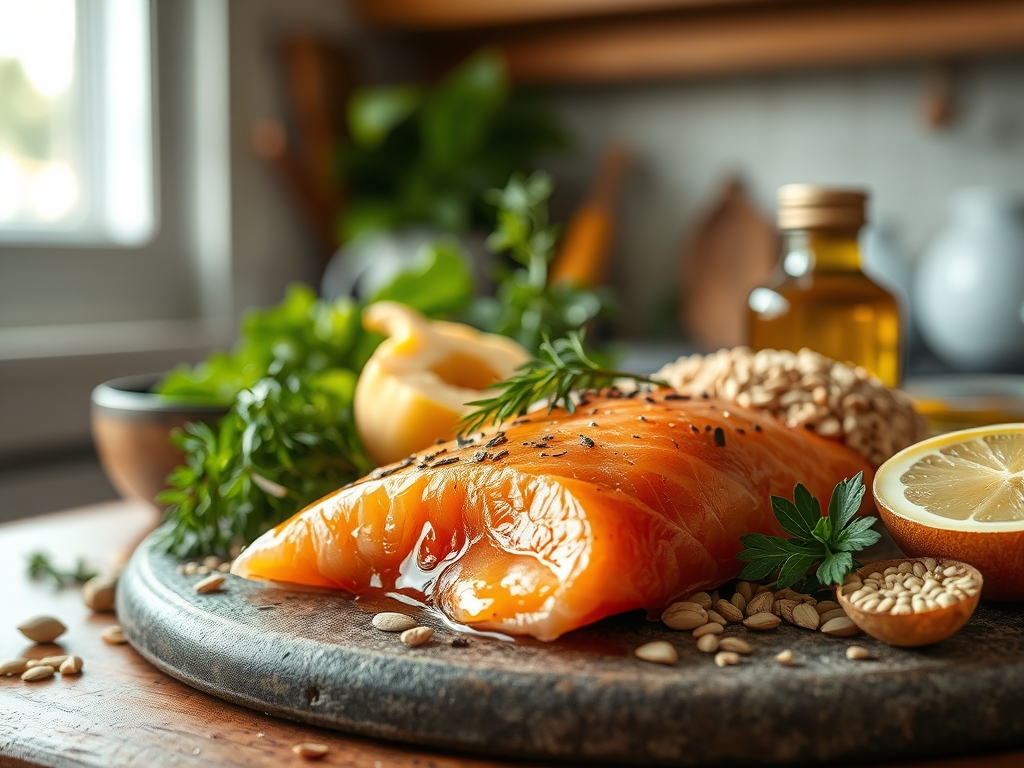
The Gathers:
To execute these high protein salmon recipes with precision, your mise-en-place must be impeccable. Start with the centerpiece: six-ounce center-cut fillets, preferably wild-caught for a more robust amino acid profile. You will need a high-smoke-point lipid, such as avocado oil or clarified butter (ghee), to facilitate the Maillard reaction without scorching. Gather your aromatics: fresh dill, flat-leaf parsley, and garlic cloves that you will crush to release their essential oils. Use a microplane to zest lemons, capturing the volatile oils in the flavedo without the bitter white pith. For the "Smart Substitutions," consider using Greek yogurt instead of heavy cream in your sauces to increase the protein-to-calorie ratio while maintaining a viscous, creamy mouthfeel. If you are avoiding dairy, a well-shaken can of full-fat coconut milk provides the necessary saturated fats to carry flavor across your palate. Finally, keep a bowl of flaky sea salt and a pepper mill nearby; seasoning from a height ensures an even distribution of crystals across the protein fibers.
The Clock
Efficiency in the kitchen is about "Chef's Flow," the ability to multitask without compromising the integrity of the ingredients. For these high protein salmon recipes, your total active time is approximately 15 minutes, with a total turnaround of 25 minutes. The flow begins with "tempering" your fish; take it out of the refrigerator 20 minutes before cooking to ensure the internal temperature rises slightly, which prevents the muscle fibers from seizing when they hit the heat. While the fish tempers, use a bench scraper to organize your chopped aromatics and prep your complex carb base, such as quinoa or farro. The actual cooking process is rapid; salmon requires only 3 to 4 minutes per side. By the time your grains are fluffed and your greens are wilted, the salmon will be resting, allowing the juices to redistribute for a succulent finish.
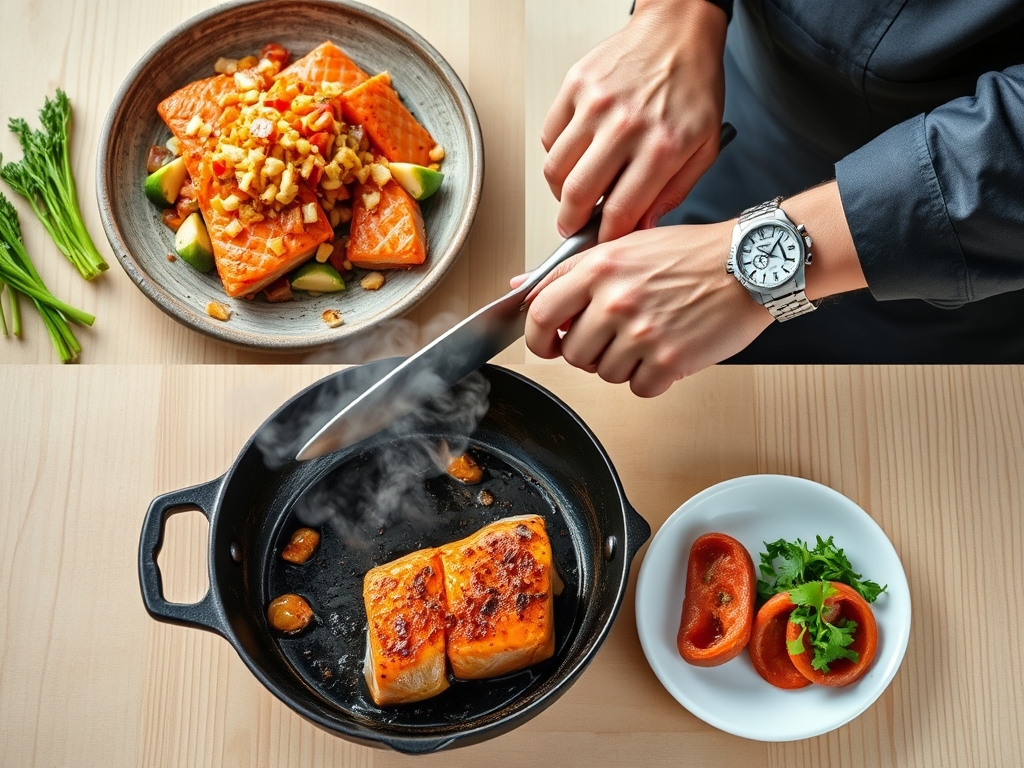
The Masterclass
1. The Surface Preparation
Dry the skin of the salmon meticulously using paper towels until it feels like parchment. Moisture is the enemy of the sear; any residual water will create a steam barrier, preventing the skin from becoming crisp. Use a sharp knife to score the skin lightly, which prevents the fillet from curling as the proteins contract.
Pro Tip: This is about evaporative cooling. If the surface is wet, the energy from the pan goes into boiling the water rather than browning the fish, robbing you of that savory, umami-rich crust.
2. The Initial Sear
Heat your heavy-bottomed skillet over medium-high heat until the oil shimmers and barely reaches its smoke point. Place the salmon skin-side down, pressing firmly with a flexible fish spatula for 10 seconds to ensure total surface contact.
Pro Tip: Pressing the fish prevents the contraction of collagen fibers in the skin, which otherwise causes the fillet to bow and cook unevenly.
3. The Gentle Render
Lower the heat slightly and let the salmon sit undisturbed. You are looking for the "fat render," where the subcutaneous fat under the skin melts, essentially deep-frying the skin in its own lipids. Watch the side of the fillet; you will see the opaque color creep up the sides.
Pro Tip: This is thermal conduction at work. By cooking the fish 80 percent of the way on the skin side, you protect the delicate flesh from direct, aggressive heat.
4. The Aromatic Baste
Flip the fillet using tongs and immediately add a knob of butter, crushed garlic, and thyme to the pan. As the butter foams, tilt the pan and use a large spoon to continuously bathe the salmon in the hot, flavored fat.
Pro Tip: This technique, known as arroser, uses the butter as a heat transfer medium to finish the top of the fish while infusing it with fat-soluble flavor compounds from the herbs.
5. The Carryover Rest
Remove the salmon from the pan when the internal temperature hits 125 degrees Fahrenheit for medium-rare. Place it on a warm plate and let it rest for at least 3 minutes before serving.
Pro Tip: Thermal carryover will cause the internal temperature to rise another 5 to 10 degrees. If you wait until it looks "done" in the pan, it will be overcooked by the time it hits the table.
The Deep Dive
In the world of high protein salmon recipes, the macro profile is king. A standard 6-ounce fillet provides roughly 34 grams of protein and 22 grams of heart-healthy fats. To optimize this for gains, pair it with "slow" carbohydrates like roasted sweet potatoes or sprouted brown rice to replenish glycogen stores. For those following a Keto protocol, swap the grains for a bed of sautéed spinach and hollandaise sauce. Vegan friends can mimic the fatty acid profile using algae-based supplements, though for this specific recipe, firm tofu pressed and seared with seaweed flakes offers a similar structural experience.
The Fix-It
- The Problem: The skin is sticking to the pan. The Fix: You likely tried to flip it too early. The fish will naturally "release" from the pan once the proteins have fully coagulated and browned.
- The Problem: White "gunk" is oozing out of the fish. The Fix: This is albumin, a protein that escapes when the fish is cooked too fast or too long. Lower your heat and pull the fish sooner.
- The Problem: The center is ice-cold but the outside is charred. The Fix: Your pan was too hot, or the fish was too cold. Ensure you temper the meat and use medium-high, not "nuclear," heat.
Meal Prep Science
To maintain "day-one" quality when reheating, avoid the microwave, which vibrates water molecules and turns the fish into rubber. Instead, use a "low and slow" oven method at 275 degrees Fahrenheit with a splash of water or broth covered in foil to create a gentle steam chamber.
The Wrap-Up
Mastering high protein salmon recipes is a superpower for anyone serious about their physique and their palate. By understanding the physics of the sear and the chemistry of the rest, you transform a standard gym meal into a gourmet experience. This is about fueling your body with intention, using professional tools like the saucier and the digital scale to ensure every gram of protein is accounted for and every bite is a celebration of texture. Now, go get those gains and eat like a chef while you do it!
The Kitchen Table
How do I get the skin extra crispy?
Ensure the skin is bone-dry before it hits the pan. Use a heavy-bottomed skillet to maintain consistent heat and press the fillet down firmly for the first few seconds to ensure maximum surface contact for the Maillard reaction.
Can I use frozen salmon for these recipes?
Yes, but thaw it completely in the refrigerator overnight. Pat it dry thoroughly to remove excess moisture from the freezing process. This prevents steaming and ensures you can still achieve a professional-grade sear and firm texture.
What is the best way to tell if salmon is done?
Use a digital thermometer to check for an internal temperature of 130 degrees Fahrenheit. Alternatively, press the side of the fillet; if it begins to flake along the natural muscle lines under gentle pressure, it is ready to rest.
Why does my salmon always turn out dry?
Dryness is usually caused by overcooking or failing to account for thermal carryover. Remove the fish from the heat when it is slightly under your desired doneness, as the internal temperature will continue to rise during the resting phase.