
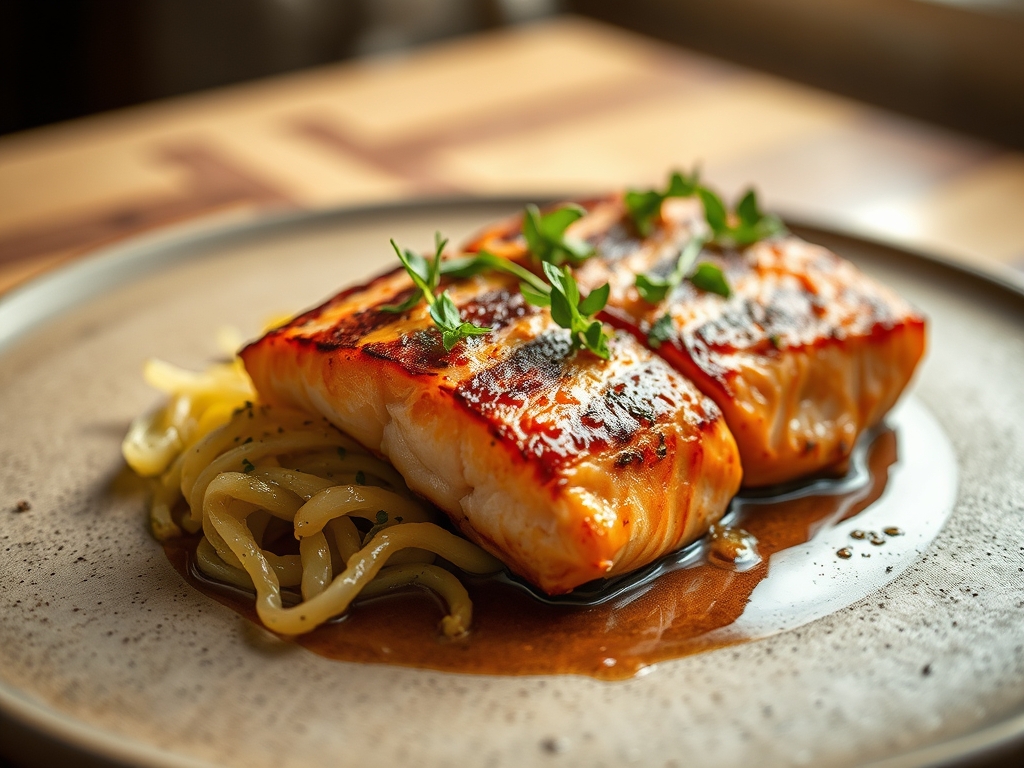
Picture a heavy-bottomed skillet resting on your stovetop; the cast iron is radiating a steady heat that promises a perfect sear. As the salmon hits the shimmering oil, the sound is a crisp, rhythmic crackle that signals the start of the Maillard reaction. This is the heart of why cabbage and salmon recipes have become the ultimate weeknight obsession for those who crave both luxury and efficiency. The sulfurous, earthy crunch of shredded brassica meets the rich, buttery lipids of Atlantic salmon in a dance of textures that feels like a five-star meal but cleans up in a single pan. We are not just tossing ingredients together; we are engineering a balance of piquant acidity and savory depth. Whether you are aiming for a zesty lime-cilantro finish or a deep, umami-rich soy glaze, the versatility of these two ingredients is unmatched. By the time the cabbage begins to wilt and caramelize in the rendered fish fats, your kitchen will smell like a high-end bistro. Grab your favorite apron because we are about to turn these humble staples into a culinary masterpiece.
The Gathers:
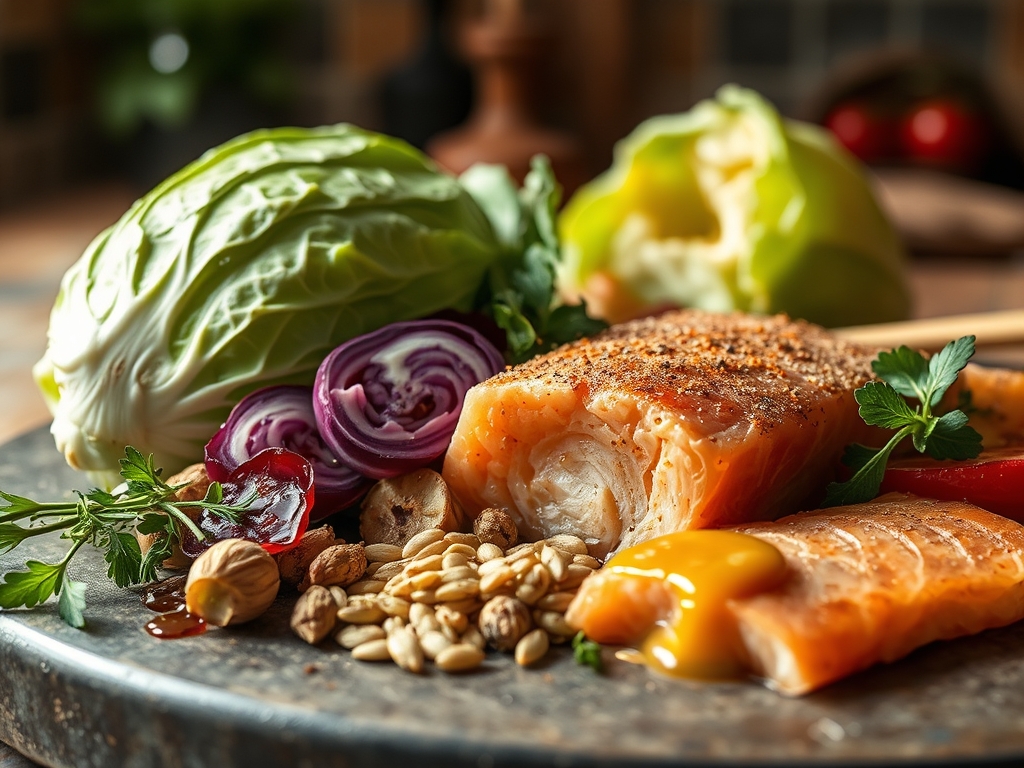
To execute these cabbage and salmon recipes with precision, your mise-en-place must be organized. Start with two six-ounce salmon fillets; look for center-cut portions with uniform thickness to ensure even heat distribution. You will need half a head of green or savoy cabbage, shredded into fine ribbons using a sharp chef knife or a mandoline for consistent surface area. For the aromatic base, gather three cloves of garlic, a thumb-sized piece of ginger, and two scallions. The flavor profile relies on a balance of fats and acids: high-smoke point avocado oil for the initial sear, followed by toasted sesame oil and fresh lime juice for the finish.
Smart Substitutions: If you cannot find savoy cabbage, Napa cabbage offers a more delicate, water-dense alternative that wilts faster. For a keto-friendly swap, replace any honey or sugar in your glaze with a drop of liquid monk fruit. If you are out of fresh ginger, a half-teaspoon of ground ginger provides the necessary heat, though it lacks the bright, volatile oils of the fresh root. Always keep a microplane nearby to zest your citrus; this ensures you capture the aromatic oils without the bitter white pith.
The Clock:
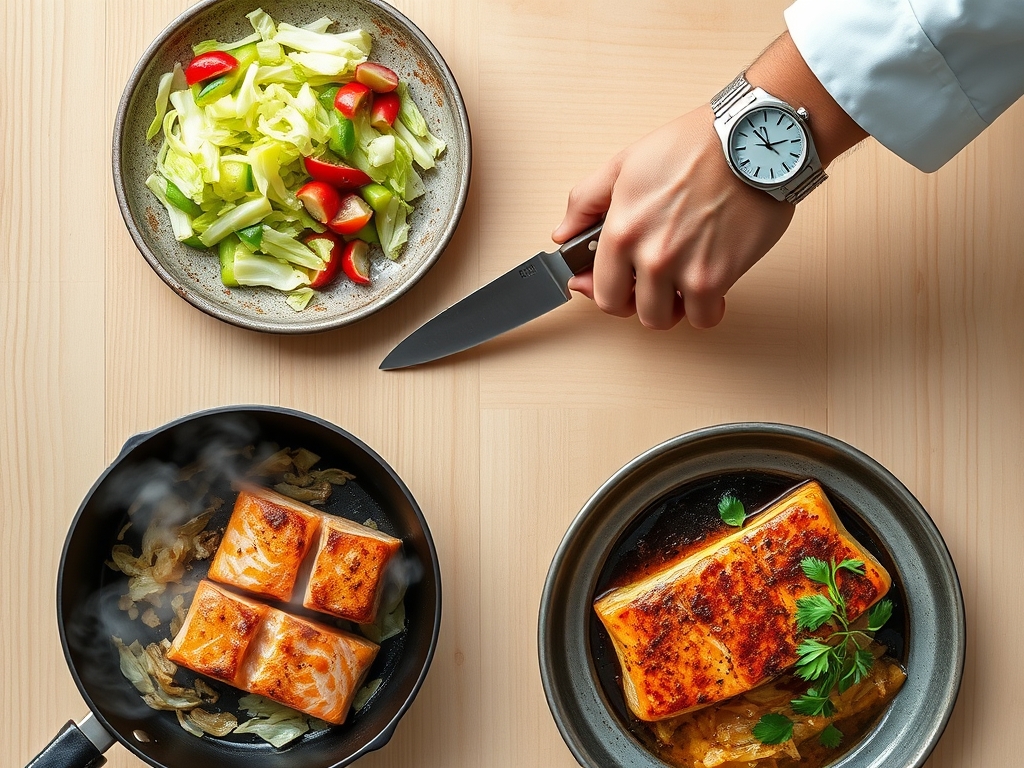
Mastering the "Chef's Flow" is about overlapping tasks to minimize downtime. Your total active time is approximately 25 minutes. Spend the first 10 minutes on prep: shredding the cabbage, mincing the aromatics, and patting the salmon dry with paper towels to remove surface moisture. The cooking phase takes roughly 12 to 15 minutes.
The flow begins with the salmon. While the fish sears, you are not just watching it; you are preparing your finishing sauce in a small saucier. Once the salmon is removed to rest, the cabbage hits the hot pan immediately to pick up the fond. This sequence ensures that by the time the cabbage is tender and infused with flavor, the salmon has finished its carryover cooking and is ready to be flaked back into the pan.
The Masterclass:
1. The Critical Dry-Down
Use a paper towel to press firmly onto every surface of the salmon fillets. Removing moisture is the only way to achieve a crisp skin and prevent the fish from steaming rather than searing.
Pro Tip: This prevents the formation of a steam barrier. If the surface is wet, the energy of the pan is spent evaporating water at 212 degrees Fahrenheit rather than triggering the Maillard reaction, which requires temperatures above 300 degrees.
2. Tempering the Pan
Place your heavy-bottomed skillet over medium-high heat. Add the avocado oil and wait until it reaches its shimmer point. You should see faint wisps of smoke before the fish ever touches the metal.
Pro Tip: This is known as the Leidenfrost effect. A properly heated pan creates a microscopic layer of vapor that prevents the delicate proteins of the fish from bonding to the skillet's surface, ensuring a clean flip.
3. The Skin-Side Sear
Place the salmon skin-side down. Use a flexible fish spatula to press the fillets down for the first 30 seconds. This prevents the skin from curling as the collagen fibers contract under heat.
Pro Tip: Pressing the fish ensures maximum contact with the heat source. This allows the subcutaneous fat to render efficiently, resulting in skin that is shatteringly crisp rather than rubbery.
4. Deglazing and Cabbage Integration
After removing the salmon, the pan will be coated in browned bits called fond. Toss in your shredded cabbage and a splash of rice vinegar or water. Use a wooden spoon to scrape the bottom of the pan.
Pro Tip: This is "deglazing." The liquid dissolves the concentrated sugars and proteins stuck to the pan, incorporating those deep flavors back into the cabbage through a process of rapid evaporation and infusion.
5. The Gentle Wilt
Sauté the cabbage only until it is "al dente." It should be vibrant and slightly softened but still retain a structural snap. Overcooking will lead to a sulfurous odor as the vegetable's cell walls collapse and release isothiocyanates.
Pro Tip: This preserves the cabbage's vitamin C and glucosinolates. High heat for a short duration prevents the breakdown of these heat-sensitive phytonutrients, keeping the dish nutritionally dense and visually appealing.
The Deep Dive:
When we look at the macro nutrition of cabbage and salmon recipes, we see a powerhouse of Omega-3 fatty acids and high-quality protein paired with low-glycemic carbohydrates. A standard serving provides roughly 35 grams of protein and 12 grams of healthy fats, making it a staple for metabolic health.
Dietary Swaps: For a vegan version, swap the salmon for thick slabs of "lion's mane" mushrooms or extra-firm tofu pressed to remove moisture. If you are following a strict Paleo protocol, ensure your soy sauce substitute is coconut aminos to avoid legumes and added sugars.
The Fix-It:
- Fish is sticking: You likely tried to flip it too early. Protein "releases" from the pan naturally once the sear is complete. Wait another 60 seconds.
- Cabbage is watery: You crowded the pan. Cook the cabbage in two batches or use a wider skillet to allow moisture to evaporate quickly.
- Salmon is dry: You ignored carryover cooking. Remove the fish when the internal temperature hits 125 degrees Fahrenheit; it will rise to the perfect 135 degrees while resting.
Meal Prep Science: To reheat this dish without making the salmon "fishy," avoid the microwave. The high-frequency waves agitate water molecules, causing the delicate fats to oxidize and smell. Instead, use a low oven (275 degrees) or a quick flash in a hot skillet with a teaspoon of water to re-steam the cabbage.
The Wrap-Up:
There is a certain magic in the simplicity of cabbage and salmon recipes. It is a dish that respects your time while honoring your body's need for real, vibrant fuel. By mastering the physics of the sear and the chemistry of the deglaze, you have graduated from a mere cook to a kitchen scientist. The next time you see a head of cabbage, don't think of it as a side dish; think of it as the crunchy, caramelized canvas for your next culinary win.
The Kitchen Table:
How do I prevent the salmon from smelling "fishy"?
Always buy high-quality, fresh fish and pat it dry before cooking. The smell usually comes from Trimethylamine (TMA) which forms as fish ages. Rinsing with a little lemon juice can also neutralize these odors before the fish hits the pan.
Can I use red cabbage instead of green?
Yes, but be aware that red cabbage contains anthocyanins that turn blue or grey when cooked with alkaline ingredients. Add an acidic component like vinegar or lemon juice to the skillet to keep the red cabbage a vibrant, bright magenta.
What is the best way to shred cabbage quickly?
Use a mandoline slicer for paper-thin ribbons, but always use the safety guard. If using a knife, cut the cabbage into quarters, remove the core, and slice crosswise. A food processor with a slicing disk also works for large batches.
Is it safe to eat salmon skin?
Absolutely. The skin contains the highest concentration of Omega-3 fatty acids. When seared correctly using the "press and sear" method, it becomes a delicious, crispy crackling that provides a necessary textural contrast to the soft cabbage and flaky fish.