
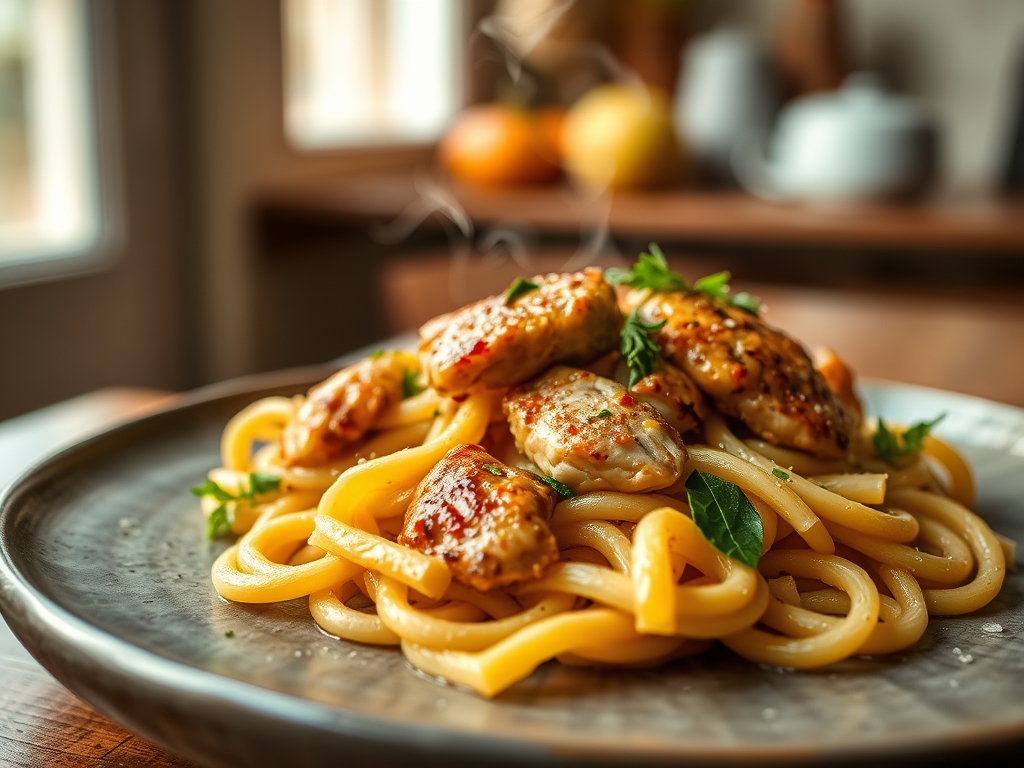
The moment boneless chicken thighs hit a preheated stainless steel pan, the Maillard reaction begins its work, transforming pale protein into bronzed, caramelized flavor bombs that will anchor your sauce. That sizzle is your first signal that dinner is about to succeed. Pairing that deeply browned poultry with penne creates a structural advantage: those ridged tubes trap sauce in every bite, delivering balanced flavor from fork to finish. This collection of penne and chicken recipes strips away the guesswork and arms you with nine reliable blueprints, each built on technique, not luck. You will learn how to manage pan temperature, emulsify pan sauces without breaking them, and coax maximum flavor from modest ingredient lists. Whether you reach for a creamy Parmesan base, a bright lemon-caper finish, or a smoky paprika glaze, the fundamental mechanics remain consistent. Master the core methods here, and you will own weeknight dinners and weekend gatherings alike.
The Gathers
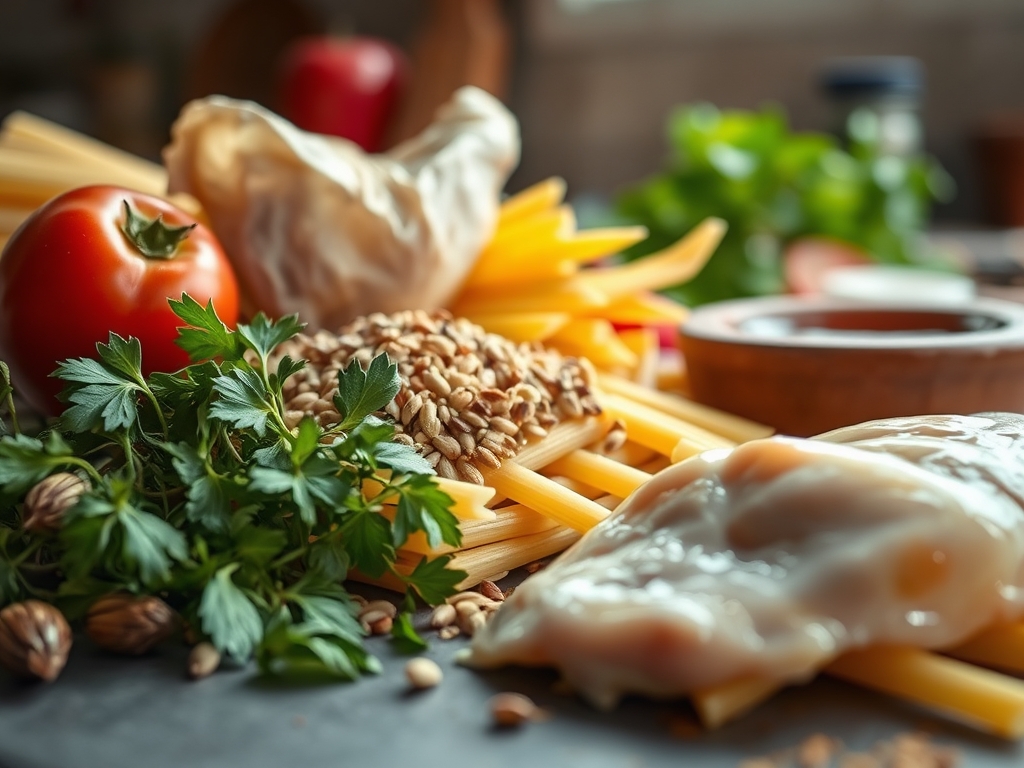
As you see in the ingredient spread below, the foundation is deceptively simple: boneless, skinless chicken thighs (not breasts, for superior moisture retention), penne rigate (ridged, not smooth), extra-virgin olive oil, garlic cloves (smashed, not minced, for controlled sweetness), dry white wine (or stock for alcohol-free builds), heavy cream or chicken stock, Parmigiano-Reggiano (aged 24 months minimum for crystalline umami), fresh basil or parsley, kosher salt, and freshly cracked black pepper.
Secondary players include sun-dried tomatoes, capers, baby spinach, smoked paprika, red pepper flakes, and lemon zest. Each recipe in this collection remixes these elements, so buy once and cook nine ways.
Smart Substitutions: Swap thighs for breasts if you prefer leaner meat, but reduce cook time by 2 minutes and brine for 15 minutes in 3% salt solution (30 g salt per liter water). Replace cream with full-fat coconut milk for dairy-free builds. Substitute penne with rigatoni, ziti, or even gluten-free brown rice penne without structural loss.
The Clock
Prep Time: 12 minutes (knife work, garlic smashing, cheese grating, herb washing).
Cook Time: 28 minutes (chicken sear: 6 minutes, pasta boil: 11 minutes, sauce assembly: 11 minutes).
Total Time: 40 minutes from drawer to table.
Chef's Flow: Start your pasta water (6 quarts, 2% salinity) on high heat the moment you enter the kitchen. While it climbs to a boil, portion and season your chicken, then preheat your largest stainless steel skillet over medium-high. By the time the water boils, your chicken will be seared and resting. Drop the pasta, build your sauce in the same skillet (using fond as your flavor base), and everything converges in a single toss. This sequencing eliminates idle time and ensures the pasta hits the sauce at peak starch hydration.
The Masterclass
Step 1: Season and Sear the Chicken
Pat thighs dry with paper towels. Season both sides with kosher salt (1 g per 100 g meat) and black pepper. Heat 2 tablespoons olive oil in a 12-inch stainless skillet over medium-high until it shimmers (about 190°C/375°F). Lay thighs presentation-side down and leave undisturbed for 3 minutes.
Chef's Secret: Resist the urge to move the meat. Surface moisture must evaporate before browning begins. If you peek and the chicken sticks, wait another 30 seconds. It will release when a proper crust forms.
Step 2: Flip and Finish
Turn thighs with tongs and cook the second side for 3 minutes. Internal temperature should read 68°C/155°F (carryover will bring it to 74°C/165°F during rest). Transfer to a plate and tent loosely with foil.
Why It Works: Thighs contain more intramuscular fat and connective tissue than breasts, so they tolerate slight overcooking without turning dry. Carryover cooking accounts for the final 6°C/10°F rise.
Step 3: Build the Fond and Deglaze
Reduce heat to medium. Add 1 tablespoon olive oil and 4 smashed garlic cloves. Stir for 45 seconds until fragrant but not brown. Pour in 120 ml (½ cup) dry white wine and scrape the pan bottom with a wooden spoon, dissolving every caramelized protein bit.
Chef's Secret: Wine acidity (pH 3.0-3.5) helps solubilize browned proteins. Let it reduce by half (about 90 seconds) to concentrate flavor and cook off raw alcohol burn.
Step 4: Emulsify the Sauce
Add 240 ml (1 cup) heavy cream or chicken stock. Bring to a gentle simmer. Stir in 50 g (½ cup) finely grated Parmigiano-Reggiano, whisking constantly until melted. The sauce should coat the back of a spoon.
Why It Works: Cheese contains casein proteins that bind fat and water into a stable emulsion, but only below 82°C/180°F. Higher heat causes the proteins to clump and the sauce to break. Keep it at a bare simmer.
Step 5: Marry Pasta and Sauce
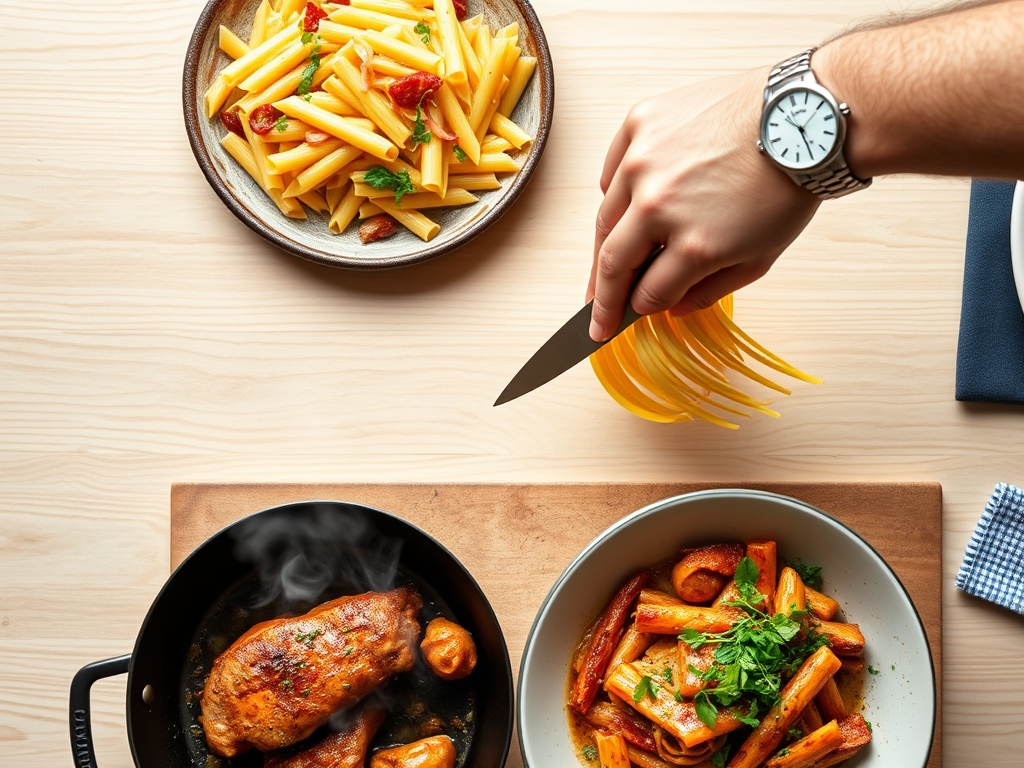
Note the texture shown in the step-by-step photos: the pasta should be drained 1 minute shy of al dente, retaining a firm, chalky core. Add penne directly to the simmering sauce along with 60 ml (¼ cup) reserved pasta water. Toss over medium heat for 90 seconds.
Chef's Secret: Starchy pasta water contains dissolved amylose, a natural thickener and emulsifier. It helps the sauce cling to every ridge. The final minute of cooking happens in the sauce, not the boiling water, so the pasta absorbs flavor as it finishes.
Step 6: Slice and Integrate Chicken
Slice rested thighs against the grain into ½-inch strips. Fold them into the pasta along with a handful of torn basil or parsley. Toss gently. Taste and adjust salt.
Why It Works: Slicing against the grain shortens muscle fibers, making each bite more tender. Adding chicken at the end prevents overcooking and keeps the slices intact.
Nutritional Info
Per serving (based on Recipe 1: Creamy Parmesan Penne with Chicken, serves 4):
Calories: 620 kcal
Protein: 38 g
Fat: 28 g (Saturated: 14 g)
Carbohydrates: 52 g (Fiber: 3 g, Sugars: 3 g)
Sodium: 680 mg
Thighs deliver more iron and zinc than breasts. Cream contributes fat-soluble vitamins A and D. Penne provides complex carbohydrates for sustained energy.
Dietary Swaps
Keto: Replace penne with 500 g spiralized zucchini (cook for 60 seconds in the sauce to release moisture, then drain excess liquid). Maintain the cream and cheese. Net carbs drop to 9 g per serving.
Gluten-Free: Use certified gluten-free penne (Barilla or Jovial brands hold texture well). No other changes required.
Vegan: Swap chicken for 400 g firm tofu (pressed, cubed, pan-fried until golden). Replace cream with cashew cream (100 g raw cashews blended with 240 ml water) and Parmesan with nutritional yeast (30 g). Add 1 tablespoon white miso for umami depth.
Serving & Presentation
Rustic Family Style: Toss everything in a warmed ceramic serving bowl. Top with extra Parmesan shavings, cracked pepper, and torn basil. Serve with crusty bread for sauce mopping.
Restaurant Plating: Twirl pasta into a nest using tongs and a carving fork. Center on a wide, shallow bowl. Arrange 3 chicken slices in a fan over the top. Drizzle 1 teaspoon finishing olive oil and garnish with microgreens.
Meal-Prep Portions: Divide into four glass containers. Keep sauce slightly loose (add extra pasta water) to account for refrigerator absorption. Top each with a lemon wedge and basil sprig for brightness upon reheating.
The Pro-Dodge
Pitfall 1: Watery Sauce
Cause: Pasta not drained thoroughly or too much pasta water added.
Fix: Return the pan to medium-high heat and simmer uncovered for 2 minutes, stirring constantly, until thickened.
Pitfall 2: Rubbery Chicken
Cause: Overcooking past 74°C/165°F internal temperature.
Fix: Next time, pull thighs at 68°C/155°F and rely on carryover. If already overcooked, slice thinly and fold into the hot sauce to reabsorb moisture.
Pitfall 3: Broken Sauce (Grainy Cheese)
Cause: Adding cheese to boiling liquid or using pre-shredded cheese (contains anti-caking cellulose).
Fix: Remove pan from heat, whisk in 1 tablespoon cold butter, then gradually whisk in 2 tablespoons cold cream to re-emulsify. Always grate cheese fresh from a block.
The Meal Prep Corner
Storage: Refrigerate in airtight containers for up to 4 days. Sauce thickens as it cools; this is normal.
Reheating: Stovetop method wins. Place pasta in a nonstick skillet over medium-low heat. Add 2 tablespoons water or stock per portion, cover, and steam for 3 minutes, stirring occasionally. Microwave works but can create hot spots; use 50% power for 2-minute intervals, stirring between each.
Freezing: Freeze sauce and chicken separately from cooked pasta (pasta texture degrades). Thaw overnight in the fridge, then cook fresh pasta and combine.
The Wrap-Up
You now hold the blueprints for nine versatile, technique-driven penne and chicken recipes that adapt to your schedule, ingredient availability, and dietary preferences. Each variation builds on the same core skills: confident searing, controlled sauce emulsification, and smart pasta-water management. Cook one recipe this week, then rotate through the rest. Share your plating photos, favorite twists, and any questions in the comments. Let's build a community that cooks with intention and eats with joy.
The Kitchen Table
Can I use chicken breasts instead of thighs?
Yes, but brine them first (3% salt solution, 15 minutes) and reduce sear time to 2 minutes per side. Breasts dry out faster due to lower fat content. Pull at 63°C/145°F for carryover to 68°C/155°F.
What if I don't have white wine?
Substitute an equal volume of chicken stock plus 1 tablespoon fresh lemon juice or white wine vinegar. The acid is essential for deglazing and balancing cream.
How do I prevent pasta from sticking after draining?
Never rinse cooked pasta (it removes the starch you need for sauce adhesion). Drain and immediately toss into the sauce. If you must hold it, toss with 1 teaspoon olive oil.
Can I make the sauce ahead?
Absolutely. Prepare through Step 4, cool rapidly in an ice bath, and refrigerate for up to 2 days. Reheat gently, then proceed with Step 5 using freshly cooked pasta.
Why does my sauce separate when reheating?
Cream-based sauces can split if reheated too aggressively. Use low heat, stir constantly, and add 1 tablespoon cold cream or butter to re-emulsify. Avoid microwaving at full power.