
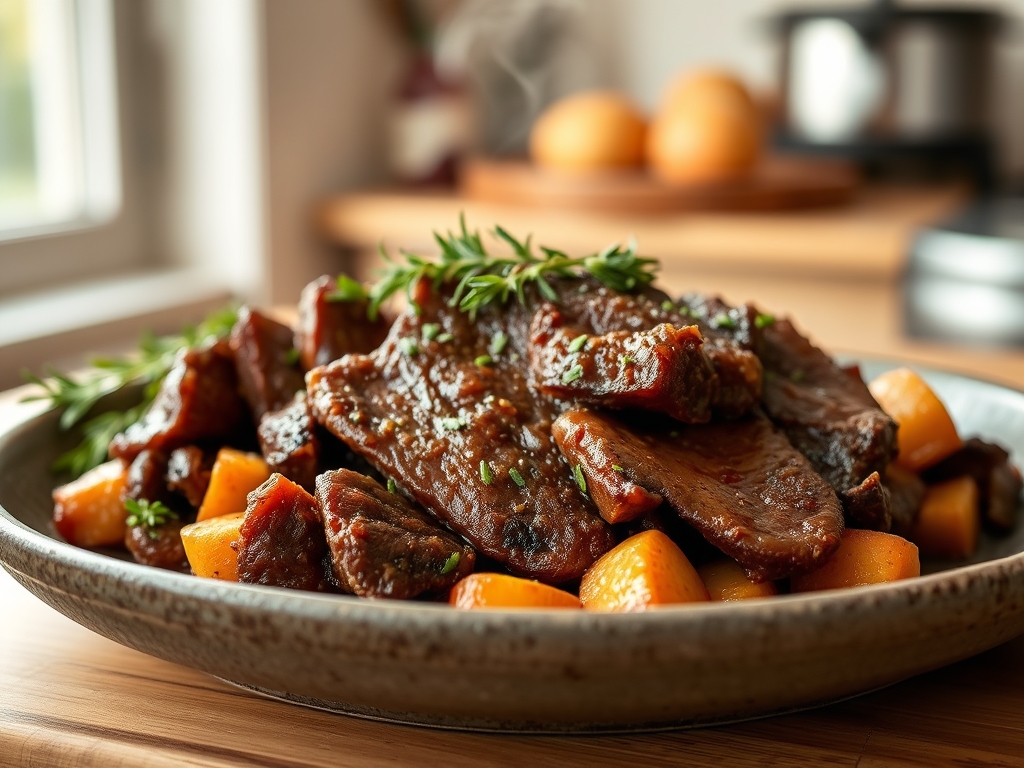
Picture this: it is a rainy Tuesday, you are exhausted, and you walk through your front door to a scent so intoxicating it feels like a warm hug from a professional chef. That deep, savory aroma is the hallmark of the best crockpot roast beef recipes, transforming a humble hunk of protein into a masterpiece of fork-tender perfection. We are moving past the days of dry, gray meat and watery gravy. Today, we are diving into the molecular magic that turns a tough chuck roast into a buttery, melt-in-your-mouth experience. This is not just about dumping ingredients into a ceramic pot; it is about mastering the chemistry of slow-twitch muscle fibers and the glory of low-and-slow heat. Grab your favorite apron and a glass of wine because we are about to elevate your Sunday supper into a scientific triumph that tastes like pure comfort.
The Gathers:
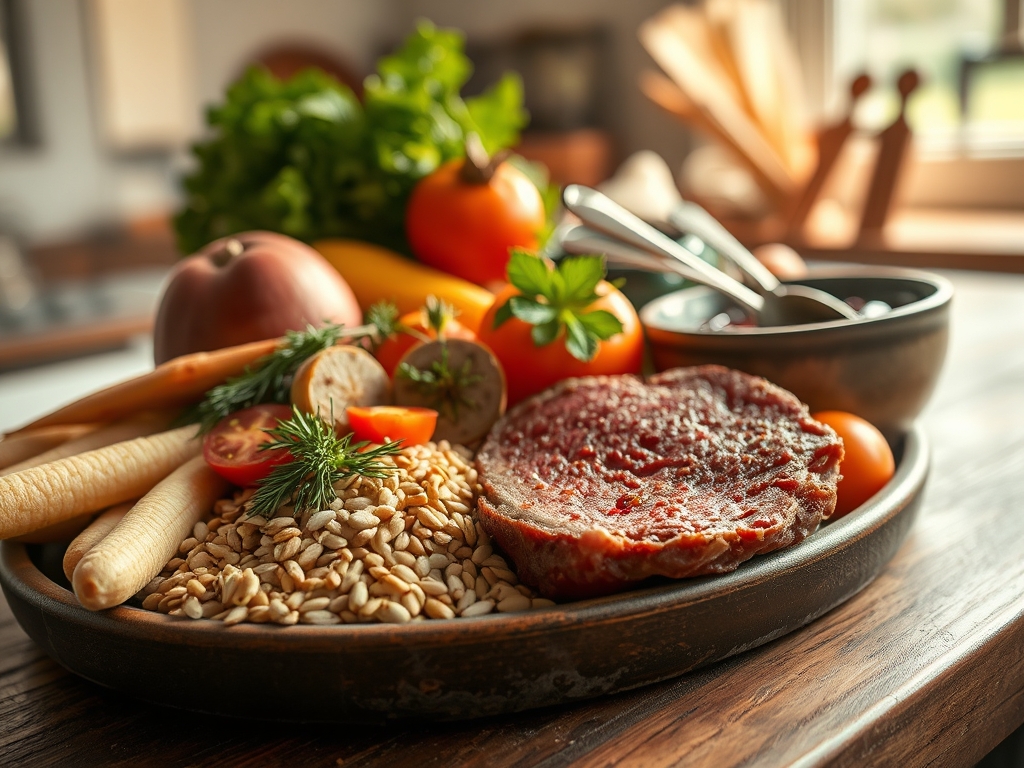
Before we flip the switch, we must assemble our laboratory. The centerpiece is a three to four pound Chuck Roast. We choose this specific cut because it is riddled with intramuscular fat and connective tissue, specifically collagen. Unlike a lean sirloin, which toughens under heat, chuck roast undergoes a phase change where collagen transforms into silky gelatin.
You will need a heavy-bottomed skillet (cast iron is king here) for the initial sear. For the aromatics, gather yellow onions, carrots, and celery; the "holy trinity" of French mirepoix. We will also utilize a microplane to zest fresh garlic and a digital scale to ensure our salt ratios are precise.
Smart Substitutions:
If you are out of red wine for deglazing, use a splash of balsamic vinegar mixed with beef stock to mimic that piquant acidity. No fresh thyme? A teaspoon of dried herbes de Provence works beautifully, but remember that dried herbs are more potent; use a one-to-three ratio when swapping for fresh. For a deeper umami punch, add a tablespoon of fish sauce or Worcestershire. It sounds strange, but the glutamates act as a flavor multiplier without making the dish taste "fishy."
The Clock
Efficiency in the kitchen is about the Chef's Flow. Your active prep time is roughly twenty minutes, but the passive "magic window" is where the heavy lifting happens.
Active Prep (20 Minutes): This includes the "sear and deglaze" phase. Do not rush this. You are building the foundation of the entire flavor profile.
The Long Game (8 Hours on Low): While your crockpot has a "high" setting, ignore it. High heat can cause the muscle fibers to contract too violently, squeezing out moisture before the collagen has a chance to melt. Eight hours on low allows for a gentle thermal transition.
The Rest (15 Minutes): Once finished, the meat needs to rest. This allows the internal juices to redistribute. If you cut it immediately, the moisture escapes as steam, leaving you with dry threads of beef.
The Masterclass
1. The Tempering and Tying
Before the meat even touches the pan, take it out of the fridge for thirty minutes. Use butcher's twine to tie the roast into a uniform cylinder. This ensures even heat distribution across the entire surface area.
Pro Tip: This is called thermal equilibrium. If the center of the meat is ice-cold while the exterior is room temperature, the outside will overcook and become "stringy" before the middle reaches the necessary temperature to break down connective tissue.
2. The Maillard Reaction
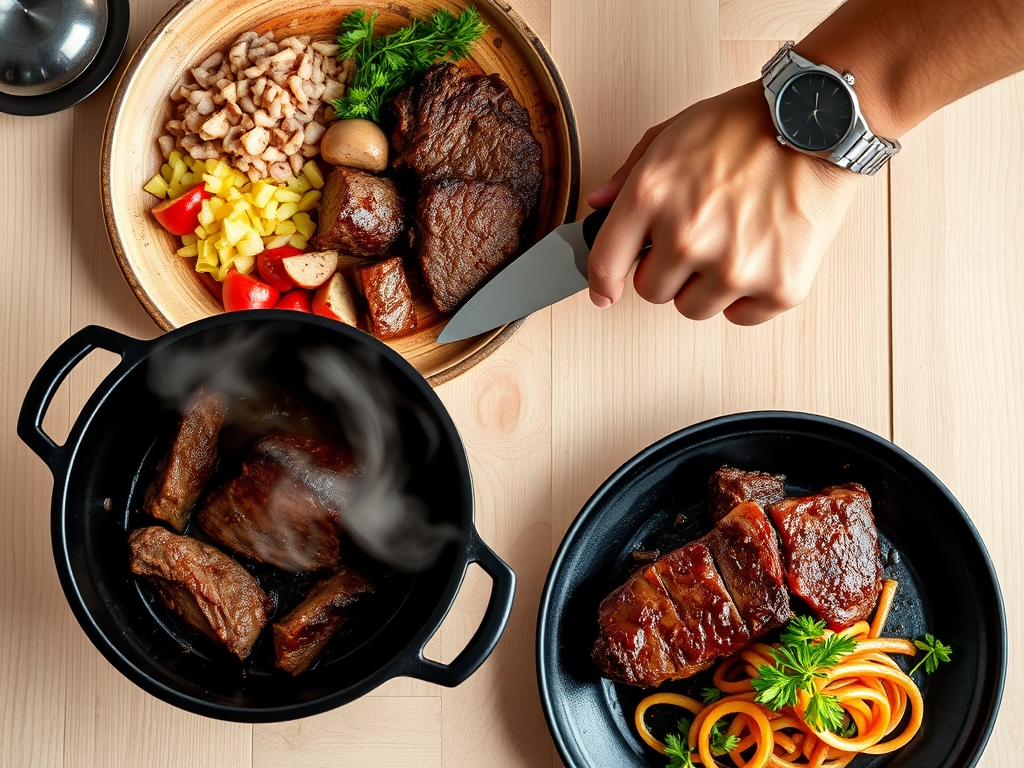
Pat the beef bone-dry with paper towels. Season aggressively with kosher salt. Heat your skillet until the oil shimmers, then sear the beef on all sides using heavy-duty tongs until a deep, mahogany crust forms.
Pro Tip: This is the Maillard Reaction, a chemical reaction between amino acids and reducing sugars. It creates hundreds of different flavor compounds that simply cannot be replicated by the slow cooker alone. No sear means no soul.
3. Deglazing the Fond
Once the meat is seared and moved to the crockpot, you will see brown bits stuck to the skillet. This is "fond." Pour in a cup of beef stock or red wine and use a bench scraper or wooden spoon to lift those bits.
Pro Tip: Deglazing captures the caramelized proteins that would otherwise be lost. This liquid becomes the base of your gravy, providing a complex, roasted depth that defines the best crockpot roast beef recipes.
4. Layering the Aromatics
Place your sturdier vegetables, like carrots and potatoes, at the bottom of the crockpot. They act as a "rack" for the beef, preventing the bottom of the roast from boiling in its own juices.
Pro Tip: This creates a convection effect within the ceramic vessel. The vegetables absorb the rendered fat from the beef as it drips down, essentially confitting themselves in liquid gold while the beef steams slightly above the liquid line.
5. The Low and Slow Infusion
Add your herbs and the deglazed liquid. Set the crockpot to low. Resist the urge to lift the lid. Every time you "peek," you lose heat and moisture, extending the cook time by thirty minutes.
Pro Tip: Maintaining a steady, low temperature is vital for enzymatic tenderization. Natural enzymes in the meat called cathepsins stay active longer at lower temperatures, helping to break down proteins before the heat eventually deactivates them.
The Deep Dive
Macro Nutrition
A standard six-ounce serving of pot roast provides roughly 40g of protein and 25g of fat. While it is calorie-dense, it is packed with bioavailable iron, zinc, and B12. To balance the macros, serve it with a high-fiber side like roasted Brussels sprouts rather than just heavy mashed potatoes.
Dietary Swaps
Keto: Replace potatoes with radishes or cauliflower florets. Radishes lose their "bite" when slow-cooked and take on the texture of a red potato.
Vegan: While this is a beef-centric guide, you can use the same "sear and deglaze" method with large "steaks" of lion's mane mushrooms or celery root for a plant-based alternative.
Gluten-Free: Ensure your beef stock is certified GF and use cornstarch or arrowroot powder instead of flour to thicken the final sauce.
The Fix-It
Problem: The meat is tough.
Fix: It likely hasn't cooked long enough. If it is still "rubbery," the collagen hasn't converted to gelatin. Give it another ninety minutes.
Problem: The sauce is too thin.
Fix: Whisk a tablespoon of cornstarch with cold water to create a slurry. Stir it into the saucier with the hot juices and simmer until viscous.
Problem: The flavor is flat.
Fix: It needs acid. A teaspoon of apple cider vinegar or a squeeze of lemon juice at the very end will "brighten" the heavy fats and make the flavors pop.
Meal Prep and Reheating
To maintain "day-one" quality, store the beef submerged in its own juices. When reheating, avoid the microwave. Use a small saucepan over low heat. The liquid prevents the proteins from oxidizing, which causes that "warmed-over" funky flavor.
The Wrap-Up
Mastering the best crockpot roast beef recipes is a rite of passage for any home cook. It is the perfect marriage of scientific precision and soulful comfort. By respecting the sear, understanding the collagen-to-gelatin conversion, and practicing the art of the deglaze, you have transformed a budget-friendly cut of meat into a luxury dining experience. Your kitchen is now a sanctuary of savory aromas and culinary excellence. Go ahead, take that first bite; you have earned it!
The Kitchen Table
Can I cook a roast beef from frozen in a crockpot?
No. It is a food safety risk. The meat stays in the "danger zone" (40F to 140F) for too long, allowing bacteria to multiply. Always thaw your roast completely in the refrigerator before starting the slow-cooking process.
Why is my pot roast dry even though it is in liquid?
You likely cooked it on "High" or for too long. High heat causes muscle fibers to contract tightly and expel moisture. Once the fibers are squeezed dry, no amount of external liquid can make them juicy again.
What is the best cut of meat for pot roast?
The Chuck Roast is the gold standard. It contains the perfect ratio of fat and connective tissue. Other options include brisket or bottom round, but chuck provides the most consistent, "shreddable" texture after an eight-hour cook.
Do I really need to sear the meat first?
Technically no, but flavor-wise, yes. Searing creates the Maillard Reaction, which provides the deep, savory complexity essential for a high-quality roast. Without it, the meat will taste boiled and the gravy will lack color and depth.