
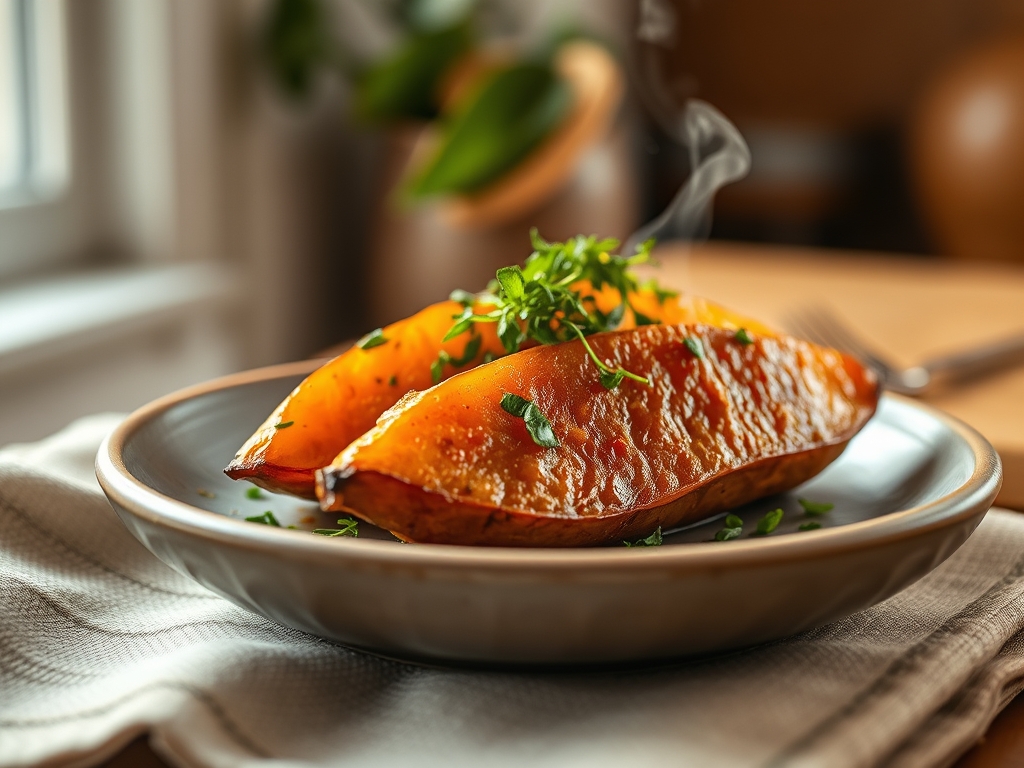
Picture the moment your oven door swings open and a cloud of caramelized, sugary steam hits your face. That scent is not just dinner; it is the smell of complex carbohydrates transforming into golden candy. Finding roasted sweet potato recipes easy enough for a Tuesday but decadent enough for a dinner party is the ultimate culinary win. We are chasing that specific texture: a skin so crisp it crackles, protecting a center that is as smooth as velvet. It is time to stop settling for soggy spuds and start mastering the molecular magic that happens at four hundred degrees.
The Gathers:
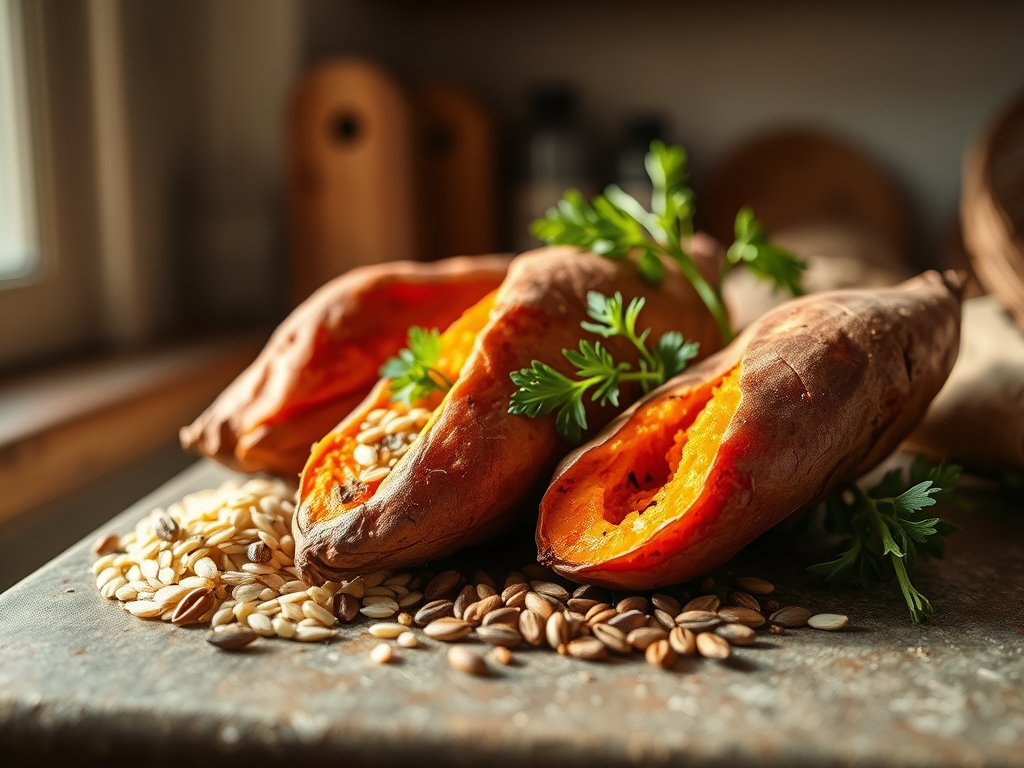
Before we ignite the flame, your mise-en-place must be precise. You will need three large Jewel or Garnet sweet potatoes; these varieties possess the high sugar content necessary for a deep Maillard reaction. Grab your digital scale to ensure each potato is roughly the same weight, which guarantees even cooking. You will also need high-smoke-point fats like avocado oil or clarified butter (ghee) to avoid acrid flavors.
For the aromatics, gather fresh rosemary and thyme. Their volatile oils will infuse the fat during the roasting process. Have your microplane ready for a final dusting of lemon zest or hard parmesan. If you are looking for smart substitutions, swap the honey for maple syrup to keep it vegan, or use smoked paprika instead of chili flakes for a piquant, earthy depth without the heat. Always use a heavy-bottomed skillet or a thick rimmed baking sheet; thin pans warp and cause uneven heat distribution.
The Clock:
The "Chef's Flow" is all about overlapping tasks to maximize efficiency. Your total active prep time is exactly twelve minutes. You will spend five minutes scrubbing and cubing, three minutes tossing with fats and spices, and four minutes preparing your garnish while the oven preheats.
The roasting duration is thirty-five to forty-five minutes depending on your cube size. However, the secret is the "Rest and Render" phase. After the timer beeps, let the potatoes sit on the hot pan for five minutes. This allows for thermal carryover, where the internal temperature continues to rise slightly, finishing the softening of the starch granules without burning the exterior.
The Masterclass:
1. The Precision Cut
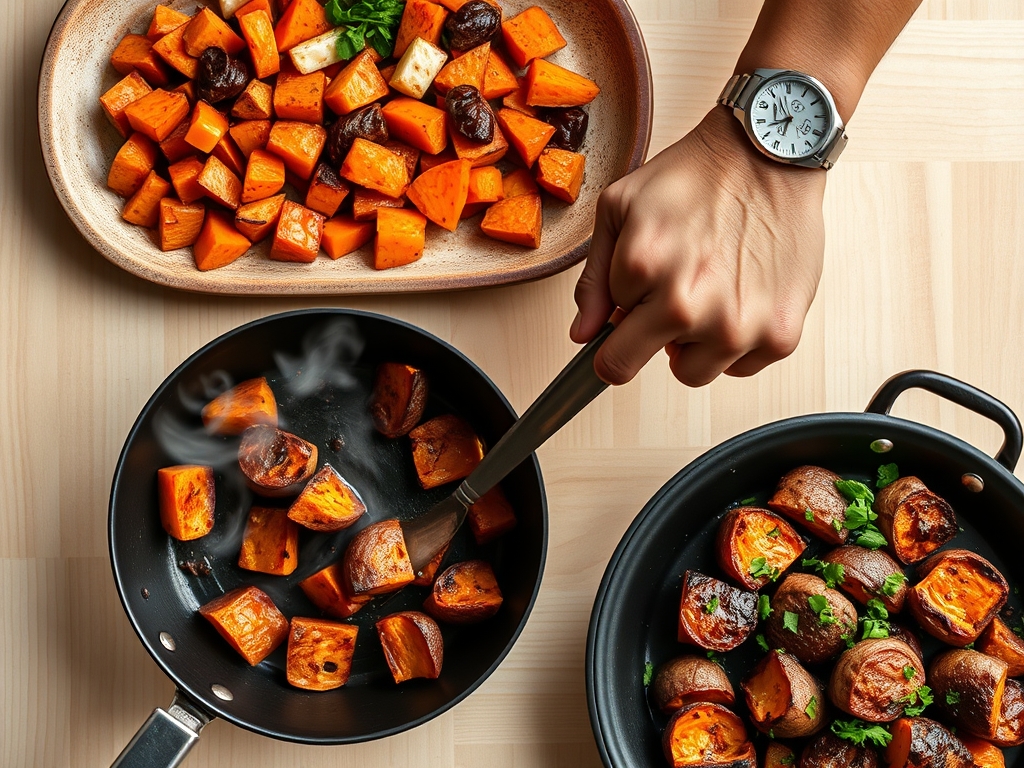
Use a sharp chef's knife or a bench scraper to organize your cubes into uniform one-inch pieces. Uniformity is not just for aesthetics; it ensures every piece reaches the same internal temperature simultaneously.
Pro Tip: This is about surface area. By increasing the surface-to-volume ratio, you create more space for the Maillard reaction to occur, resulting in more "crunchy bits" per bite.
2. The Surface Prep
Pat your potatoes bone-dry with a lint-free towel. Moisture is the enemy of the crisp. If the surface is damp, the oven's energy will be wasted evaporating water (steaming) rather than browning the sugars.
Pro Tip: Scientifically, this prevents the "latent heat of vaporization" from stalling the browning process, allowing the surface temperature to climb above 212 degrees Fahrenheit immediately.
3. The Lipid Coating
In a large bowl, toss the cubes with your chosen oil until they look viscous and glossy. Do not pour the oil directly onto the pan. Use your hands to ensure every nook and cranny is coated.
Pro Tip: This creates an emulsification layer with the potato's natural starches, which eventually fries the skin of the potato as it roasts.
4. The Strategic Spacing
Arrange the potatoes on your sheet pan with at least half an inch of "breathing room" between them. If they touch, they will trap steam and turn mushy.
Pro Tip: Proper spacing allows for convection currents to circulate hot air around all six sides of the cube, ensuring a 360-degree crunch.
5. The Mid-Roast Agitation
At the twenty-minute mark, use tongs or a metal spatula to flip the pieces. This is the moment to add your woody herbs like rosemary.
Pro Tip: Flipping prevents the bottom from over-caramelizing (burning) while the top remains pale. Adding herbs now prevents their delicate oils from scorching during the initial high-heat blast.
6. The Acidic Finish
Once out of the oven, immediately hit the potatoes with a squeeze of lime or a splash of apple cider vinegar.
Pro Tip: This is called "flavor balancing." The acidity cuts through the heavy lipids and intense sweetness, brightening the overall profile and stimulating the salivary glands.
The Deep Dive:
From a macro nutrition perspective, sweet potatoes are a powerhouse of beta-carotene and complex fiber. One medium potato provides over four hundred percent of your daily Vitamin A. For those on specialized diets, these are naturally gluten-free. To make them Keto-friendly, reduce the portion size and lean heavily into healthy fats like grass-fed butter to blunt the glycemic response.
The Fix-It: Troubleshooting Common Failures
- The Soggy Spud: You likely overcrowded the pan. Next time, use two pans or roast in batches.
- The Charred Exterior / Raw Interior: Your oven temperature is too high. Drop it by 25 degrees and use a digital thermometer to check for an internal temp of 205 degrees Fahrenheit.
- The Dull Flavor: You under-salted. Salt should be applied both before roasting (to draw out moisture) and after (for a crystalline pop).
Meal Prep Science: To reheat and maintain "day-one" quality, avoid the microwave. The microwave agitates water molecules, making the potato rubbery. Instead, use an air fryer or a saucier over medium heat to re-crisp the exterior lipids.
The Wrap-Up:
Mastering roasted sweet potato recipes easy enough for your daily rotation is a total game-changer. By understanding the chemistry of dry heat and the importance of surface area, you have moved from "home cook" to "culinary scientist." These golden gems are the perfect base for grain bowls, taco fillings, or just eating straight off the pan with a bit of flaky sea salt. Now, go preheat that oven and let the caramelization begin.
The Kitchen Table:
Why are my roasted sweet potatoes never crispy?
The most common culprit is overcrowding the pan. When potatoes are too close, they release steam that gets trapped, boiling the potatoes instead of roasting them. Give them space so the dry air can render the surface into a crisp crust.
Should I boil sweet potatoes before roasting?
Parboiling is unnecessary for sweet potatoes because they have a higher sugar and moisture content than russets. Roasting them raw at high heat allows the natural sugars to undergo the Maillard reaction more effectively, creating a superior flavor profile.
What is the best oil for roasting at high heat?
Use oils with a high smoke point like avocado oil, grapeseed oil, or clarified butter. Avoid extra virgin olive oil for 400-degree roasting, as it can break down and become bitter or smoky in the oven.
Can I leave the skin on the sweet potato?
Absolutely. The skin contains significant fiber and nutrients. When roasted, the skin becomes incredibly crisp and provides a structural contrast to the creamy interior. Just ensure you scrub them thoroughly with a vegetable brush before slicing.