
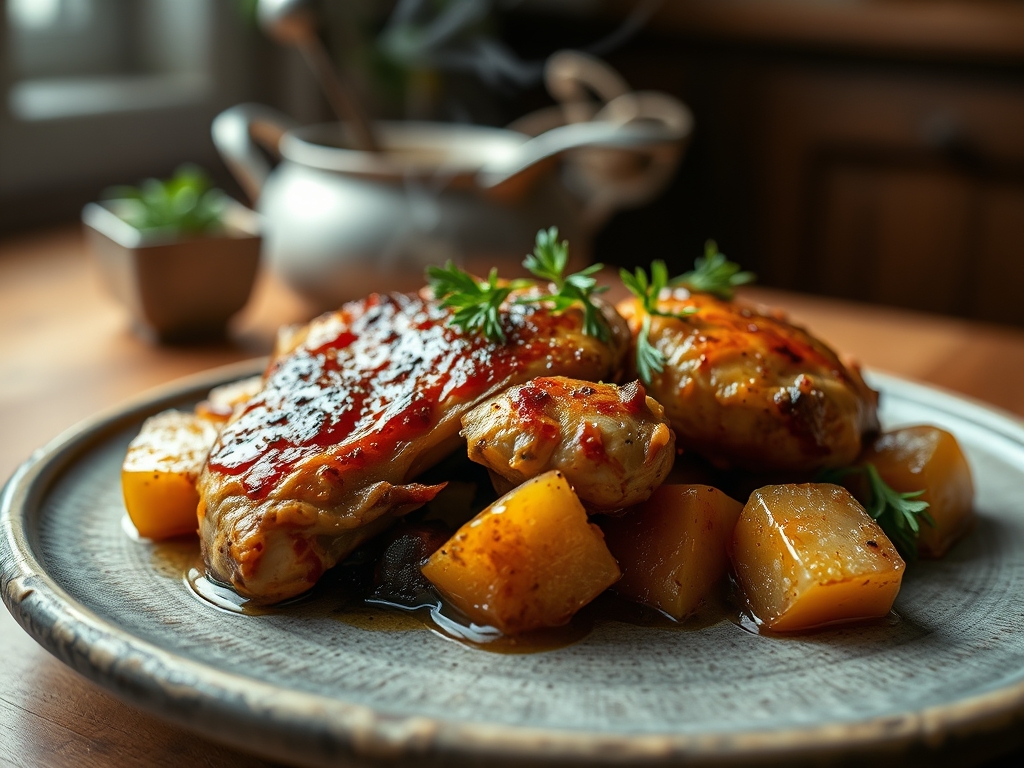
The steam rising from a slow cooker lid carries a promise: tender chicken falling apart at the fork's nudge, golden potatoes soaked in savory fat, and a kitchen that smells like someone's been cooking all day without breaking a sweat. This collection of slow cooker chicken recipes with potatoes delivers exactly that balance of minimal effort and maximum reward. Seven variations means you can rotate through nearly two months of weeknight dinners without repeating a single flavor profile, each one engineered for the gentle, low-humidity convection environment that turns tough connective tissue into silky gelatin. The slow cooker operates at roughly 190-210°F on low, perfect for collagen breakdown without moisture loss. Bone-in thighs or drumsticks work best here; their higher fat content and connective tissue thrive in long, moist heat, while breast meat turns chalky and dry past the 165°F safety threshold. Potatoes, meanwhile, absorb the rendered chicken fat and any aromatics you layer in, becoming flavor vehicles in their own right. Waxy varieties like Yukon Gold hold their shape through six hours of heat, while russets break down into a thickening agent for the braising liquid.
The Gathers
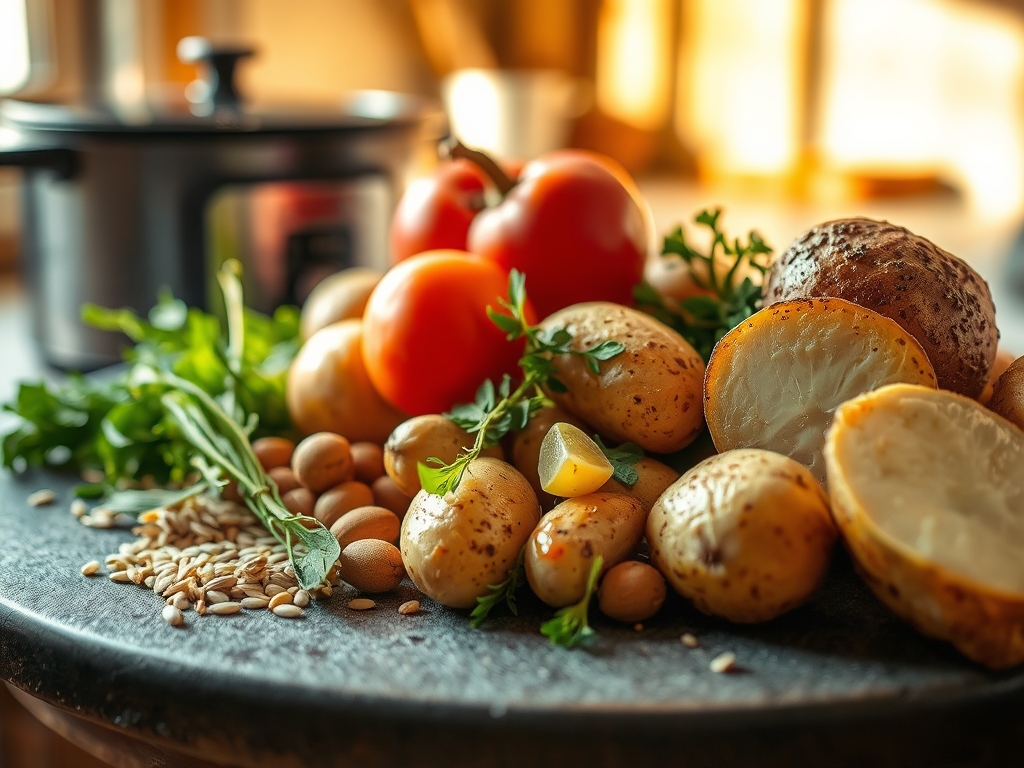
As you see in the ingredient spread below, the foundation stays consistent: bone-in, skin-on chicken thighs (about 2.5 lbs for a 6-quart cooker), Yukon Gold potatoes (2 lbs, halved or quartered depending on size), and a trio of aromatics. Yellow onions provide the sweetest caramelization over long cooking times, while garlic cloves (six to eight, smashed) release allicin compounds that mellow into nutty sweetness. Fresh thyme and rosemary stems go in whole; their oils leach out slowly, and you can fish out the woody stems before serving. Chicken stock, preferably low-sodium, gives you control over the final salinity. Tomato paste (two tablespoons) adds glutamates, the same umami punch that makes restaurant sauces taste "richer." Olive oil or butter (two tablespoons) coats the chicken skin, encouraging what little browning can happen in a moist environment.
Smart Substitutions: Swap thighs for drumsticks at a 1:1 ratio. Replace Yukon Golds with fingerlings for a creamier bite or sweet potatoes for a subtle caramelized edge. If you're out of fresh herbs, use one tablespoon of dried Italian seasoning; dried herbs are three times more potent by volume. Coconut aminos can stand in for soy sauce in gluten-free builds, and white miso paste works as a tomato paste alternative for an earthy, fermented backbone.
The Clock
Prep Time: 15 minutes
Cook Time: 6 hours on low (or 3.5 hours on high)
Total Time: 6 hours 15 minutes
The beauty of slow cooker workflows is frontloading. Spend your 15 minutes in the morning: halve potatoes, smash garlic, nestle chicken into the insert. Hit the button and walk away. The "high" setting runs about 300°F, finishing in half the time but with slightly less collagen conversion; use it only when you're in a bind.
Chef's Flow: Prep the night before and store everything in the slow cooker insert in the fridge. In the morning, pull it out, let it sit for 20 minutes to take the chill off, then start the cycle. Cold ceramic inserts can crack under thermal shock if the base heats too quickly, so that rest period is insurance. Set a timer for 30 minutes before service to check liquid levels; if it's too thin, pull the lid off for the last stretch to concentrate flavors via evaporation.
The Masterclass
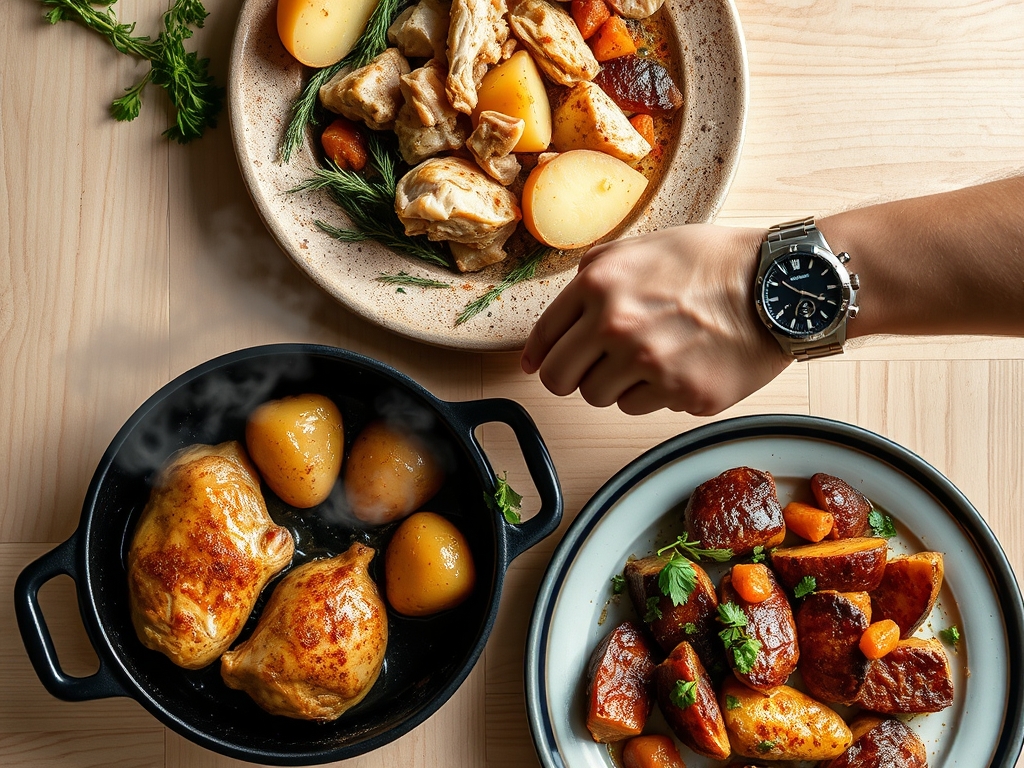
Note the texture shown in the step-by-step photos: the chicken skin won't crisp in a slow cooker's humid environment, but you can finish it under a broiler for textural contrast.
Step 1: Season and Sear (Optional but Recommended)
Pat chicken thighs dry with paper towels, then season aggressively with kosher salt and black pepper. Heat a cast-iron skillet over medium-high until it just starts smoking, then sear thighs skin-side down for 3-4 minutes. You're not cooking them through; you're initiating the Maillard reaction, which creates hundreds of flavor compounds that survive the long braise.
Chef's Secret: Drying the skin is non-negotiable. Water prevents browning because it keeps surface temp below 300°F, the threshold where amino acids and sugars start reacting. Even 30 seconds under a paper towel makes a measurable difference.
Step 2: Layer Potatoes and Aromatics
Toss halved potatoes with olive oil, salt, and pepper, then spread them across the slow cooker base. Scatter smashed garlic cloves and onion wedges over the top. This layering ensures the potatoes, which take longer to tenderize than meat, sit closest to the heat source.
Why It Works: Potatoes are starch fortresses; their cells need sustained heat to gelatinize. Placing them at the bottom maximizes contact with the ceramic, which radiates gentle, consistent warmth.
Step 3: Nestle the Chicken
Arrange seared (or raw) chicken thighs over the potato bed, skin-side up. Pour 1 cup of chicken stock around the edges, avoiding the skin to preserve any crispness from the sear. Add two tablespoons of tomato paste and fresh herb stems.
Chef's Secret: Elevating the chicken on a potato platform keeps the skin above the liquid line. Steam and liquid are enemies of browning; even a half-inch of clearance helps.
Step 4: Set and Forget
Cover and cook on low for 6 hours. Resist the urge to lift the lid; each peek drops the internal temp by 10-15°F and adds 20 minutes to the cook time. The slow cooker's tight seal traps steam, creating a self-basting environment.
Why It Works: Collagen, the connective tissue in chicken thighs, denatures into gelatin between 160-180°F over several hours. Gelatin is what gives the braising liquid that lip-coating, luxurious body.
Step 5: Finish and Rest
At the 6-hour mark, check the potatoes with a fork; they should yield with zero resistance. If you want crispy skin, transfer chicken to a foil-lined baking sheet and broil for 3-4 minutes, watching constantly to prevent scorching. Stir the potatoes in the braising liquid to break up any that are falling apart; they'll thicken the sauce naturally.
Chef's Secret: Let the chicken rest for 5 minutes post-broil. This allows juices to redistribute; cutting immediately causes moisture loss, leaving dry meat on the plate.
Nutritional Info
Per serving (1 thigh + 1 cup potatoes):
Calories: 420
Protein: 34g
Fat: 18g (7g saturated)
Carbohydrates: 32g
Fiber: 4g
Sodium: 680mg
Bone-in thighs provide more fat than breasts, but they also deliver more flavor and collagen-derived gelatin, which supports joint and gut health. Potatoes contribute resistant starch, a prebiotic that feeds beneficial gut bacteria, especially when cooled and reheated.
Dietary Swaps
Keto: Replace potatoes with radishes (they soften and sweeten under long heat) or cauliflower florets. Use full-fat coconut milk instead of stock for a higher fat ratio.
Paleo: This recipe is already compliant; just ensure your stock has no added sugars or MSG.
Vegan: Swap chicken for king oyster mushrooms (halved lengthwise to mimic the chicken's texture) and potatoes for sweet potatoes. Use vegetable stock and add a tablespoon of nutritional yeast for umami depth.
Gluten-Free: Verify your stock and tomato paste labels; most are naturally GF, but some brands use wheat as a thickener.
Serving & Presentation
1. The Rustic Bowl: Ladle chicken, potatoes, and braising liquid into wide, shallow bowls. Top with a fistful of fresh parsley and a drizzle of good olive oil. Serve with crusty bread for dipping.
2. The Plated Entree: Center a thigh on a white plate, surround with four potato halves arranged in a cross pattern, and spoon sauce over the top. Garnish with microgreens and a lemon wedge for acid contrast.
3. The Family-Style Platter: Transfer everything to a large oval platter, broiled chicken on top, potatoes underneath. Scatter pomegranate arils and toasted pine nuts for color and crunch.
The Pro-Dodge
Pitfall 1: Watery Sauce
Too much liquid or lifting the lid repeatedly creates a thin, uninspiring broth.
Fix: Use only 1 cup of stock for a 6-quart cooker. In the last 30 minutes, tilt the lid slightly to allow steam to escape.
Pitfall 2: Rubbery Chicken Skin
Slow cookers can't crisp; humid heat makes skin flabby.
Fix: Always finish skin-side up under a broiler for 3-4 minutes. Watch it like a hawk; broilers are unforgiving.
Pitfall 3: Mushy Potatoes
Overcooking or using the wrong variety turns them to mush.
Fix: Stick to Yukon Golds or fingerlings, and cut them into 1.5-inch pieces. Check at the 5-hour mark if you're nervous; you can always add 30 minutes, but you can't undo disintegration.
The Meal Prep Corner
Store chicken and potatoes in separate airtight containers; the potatoes absorb excess moisture and can make the chicken soggy if they sit together. Refrigerate for up to 4 days or freeze for 3 months. Reheat in a 350°F oven for 15-20 minutes to restore texture; microwaving turns the potatoes gummy. If you froze the dish, thaw overnight in the fridge, then reheat with a splash of fresh stock to rehydrate.
For "day-one" quality, undercook potatoes by 30 minutes if you know you'll be reheating. They'll finish cooking during the warm-up, avoiding that overcooked texture.
The Wrap-Up
Seven variations of slow cooker chicken recipes with potatoes means you're armed for nearly two months of hands-off, high-flavor dinners. Whether you're searing for extra depth or throwing everything in raw, the slow cooker's low, steady heat does the heavy lifting. Experiment with spice blends, swap in seasonal vegetables, or go full Mediterranean with olives and sun-dried tomatoes. Drop a comment below with your favorite variation or tag me on Instagram with your plated results; I read every single one and often feature reader photos in my monthly roundup.
The Kitchen Table
Q: Can I use boneless, skinless chicken thighs?
A: Yes, but reduce cook time to 4-5 hours on low. Boneless thighs lack the collagen-rich joints that benefit from extended braising, and they dry out faster without the skin's protective fat layer.
Q: Do I need to brown the chicken first?
A: No, but it adds a flavor layer that survives the long cook. If you skip it, add a tablespoon of soy sauce or Worcestershire for extra umami depth.
Q: Can I cook this on high to save time?
A: You can, but expect slightly less tender results. High runs around 300°F, which speeds collagen breakdown but doesn't give the same silky gelatin conversion as low heat over 6 hours.
Q: What if I don't have fresh herbs?
A: Use 1 tablespoon of dried Italian seasoning or herbes de Provence. Add it in the last hour to prevent the volatile oils from cooking off completely.
Q: Can I add vegetables like carrots or green beans?
A: Carrots, yes; add them with the potatoes. Green beans turn olive-drab and mushy; stir them in during the last 30 minutes for the best texture and color retention.