
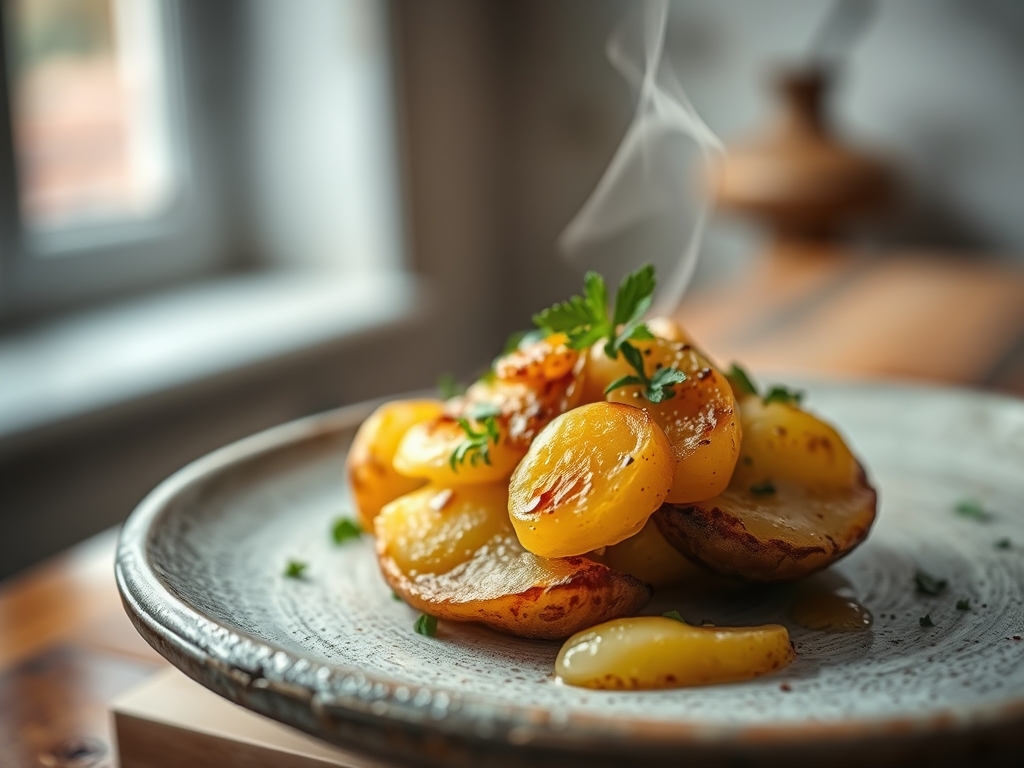
Imagine the sound of a glass shard snapping. That is the exact acoustic profile of a perfectly executed potato crust. We are moving far beyond the soggy, oil-slicked fries of your local diner. Today, we are mastering the molecular architecture of starch potato recipes to achieve a crunch so loud it should come with a noise warning. It is about manipulating amylose and amylopectin to create a glass-like exterior while the interior remains as fluffy as a cloud.
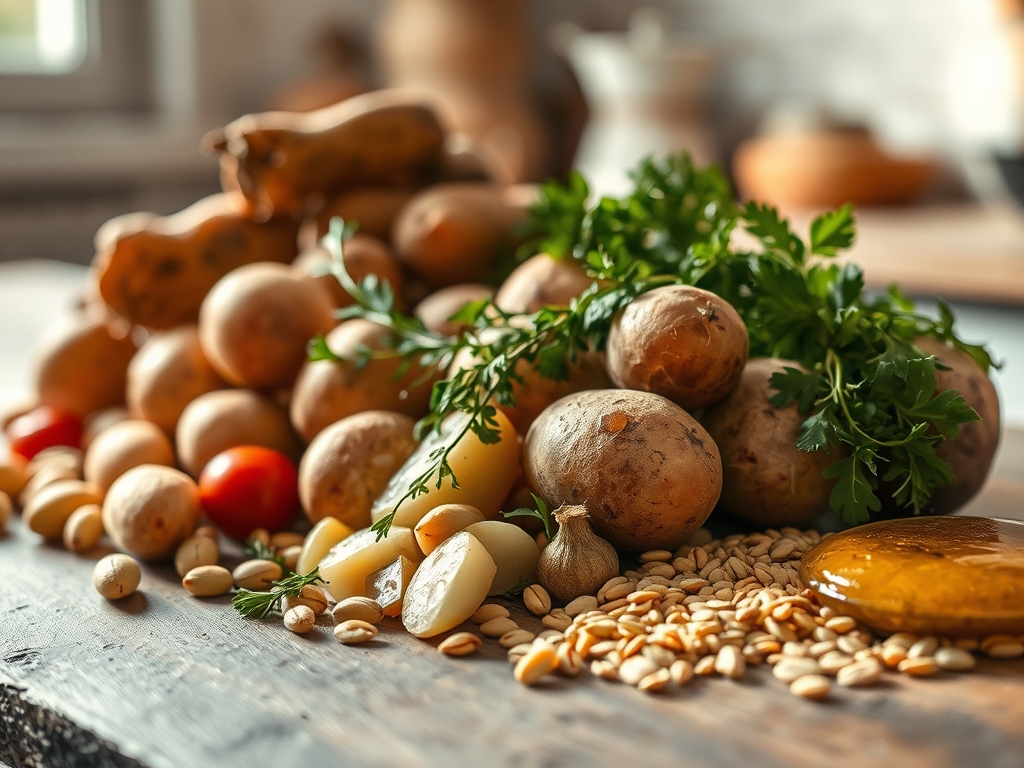
The Gathers:
To achieve structural integrity, your mise-en-place must be precise. We start with high-starch Russets or Yukon Golds. These varieties possess a high solids-to-water ratio, which is the foundational requirement for the Maillard reaction to occur without the tuber turning into a gummy mess. You will need a digital scale to ensure your ratios are exact; guesstimating is for amateurs.
Grab your heavy-bottomed skillet (cast iron is king here for heat retention) and a microplane for any aromatics. Our starch arsenal includes cornstarch for that "shatter" effect and potato starch for a more traditional, earthy bite. You will also need a high-smoke-point fat like clarified butter or duck fat. These fats render beautifully and allow for high-temperature searing without the bitter notes of burnt milk solids.
Smart Substitutions: If you are avoiding nightshades, taro root offers a similar high-starch profile but with a more viscous texture when boiled. For those looking to lighten the fat content, avocado oil is a brilliant substitute for animal fats due to its 520 degree Fahrenheit smoke point.
The Clock:
The "Chef's Flow" is the secret to not losing your mind in the kitchen. Total active prep time is 25 minutes, with a cooking window of 45 minutes. However, the true secret is the "rest and dehydrate" phase. You cannot rush the evaporation of surface moisture. If the exterior is damp, you are steaming, not frying.
Plan for a 10-minute parboil to gelatinize the surface starches, followed by a 15-minute cool-down on a wire rack. This allows the amylopectin to set, creating a tacky surface that will eventually fry into a golden lattice. The final sear takes about 12 minutes of intense, focused heat.
The Masterclass:
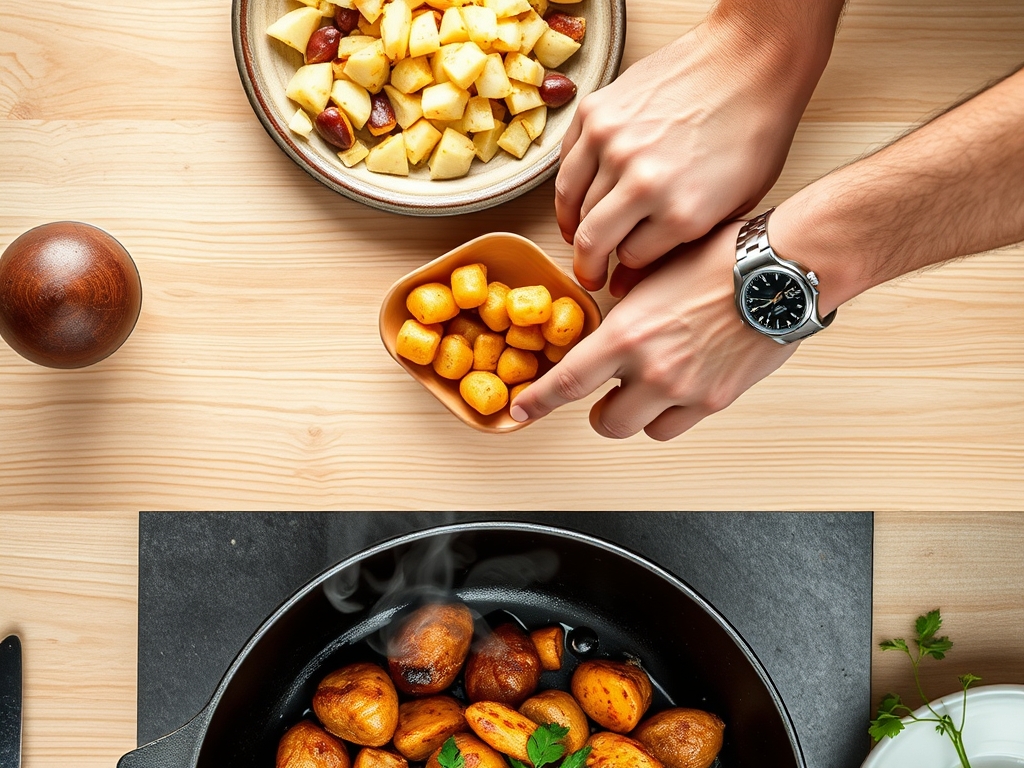
1. The Alkaline Parboil
Start by boiling your potato chunks in water spiked with a half-teaspoon of baking soda. This raises the pH of the water, which breaks down the pectin on the potato's surface more aggressively. This creates a starchy "slurry" that will eventually dehydrate into a thick, crunchy crust.
Pro Tip: This is known as enzymatic browning acceleration. By increasing the pH, you encourage the breakdown of cell walls, creating more surface area for the Maillard reaction to take hold later.
2. The Rough-Up
After draining, toss the potatoes vigorously in a large bowl. Use a bench scraper to move them around if they are too hot. You want the edges to look frayed and fuzzy. That "fuzz" is actually a layer of loose starch that will fry into a microscopic forest of crunch.
Pro Tip: This increases the surface-area-to-volume ratio. More surface area means more contact with the hot fat, resulting in a more piquant and textured mouthfeel.
3. The Fat Infusion
While the potatoes steam-dry, heat your fat in a saucier with smashed garlic and rosemary. Once the aromatics are fragrant, strain the oil. You are creating an infused medium that will penetrate the starch layer without leaving behind burnt bits of herb.
Pro Tip: Fat is a flavor carrier. By infusing the oil first, you ensure the flavor is locked into the crust rather than just sitting on the surface.
4. The High-Heat Roast
Spread the potatoes on a preheated baking sheet. Use tongs to ensure every piece is coated in the infused fat. Do not crowd the pan; if the potatoes are touching, they will trap steam and lose their structural integrity.
Pro Tip: This stage utilizes thermal carryover. Even after you remove the pan from the oven, the internal heat will continue to cook the centers while the exterior cools and hardens.
5. The Starch Dusting
Halfway through roasting, pull the pan and lightly sift a mixture of cornstarch and sea salt over the potatoes. This adds an extra layer of "glass" to the exterior. Flip them carefully to ensure even coverage.
Pro Tip: Cornstarch is pure starch with no protein, meaning it creates a crispier, more brittle crunch than flour, which contains gluten that can turn chewy.
6. The Aeration Phase
Once golden, move the potatoes to a wire cooling rack rather than a paper towel. Paper towels trap steam underneath the potato, which will immediately soften your hard-earned crust.
Pro Tip: Aerate the potatoes to allow moisture to escape from all sides simultaneously. This prevents the "soggy bottom" syndrome.
7. The Acid Finish
Just before serving, toss the hot potatoes with a spray of malt vinegar or a squeeze of lemon. The acid cuts through the richness of the rendered fat and brightens the earthy notes of the starch.
Pro Tip: This is a chemical balance. The acidity reacts with the residual salt to stimulate salivation, making the flavors taste more intense.
8. The Emulsified Dip
Serve with a side of homemade aioli. Use your immersion blender to create a stable emulsion of egg yolk, lemon, and oil. The creamy texture provides a necessary contrast to the jagged edges of the potato.
Pro Tip: An emulsification works by suspending fat droplets in water. This coats the palate and allows the savory potato flavors to linger longer.
9. The Final Seasoning
Finish with a dusting of smoked paprika or flaky sea salt. Use a microplane to grate a bit of fresh parmesan over the top while they are still screaming hot so the cheese melts into the crevices.
Pro Tip: Adding salt at the very end prevents it from drawing out internal moisture during the cooking process, which would otherwise compromise the crunch.
The Deep Dive:
From a nutritional standpoint, starch potato recipes are high-octane fuel. One serving provides roughly 250 calories, primarily from complex carbohydrates and healthy fats. To make this Vegan, simply stick to high-quality olive oil or avocado oil. For a Keto alternative, you can apply these same "roughing" techniques to cauliflower florets, though the crunch will be less "glassy" due to the lower starch content.
The Fix-It:
- Soggy Centers: You likely skipped the parboil. The internal starch needs to be gelatinized before the high-heat roast begins.
- Burnt Edges: Your oven has hot spots. Use a digital thermometer to calibrate and rotate your pan every 15 minutes.
- Oiliness: The oil wasn't hot enough when the potatoes went in. If the fat is too cool, the potato absorbs it like a sponge instead of searing.
Meal Prep: To reheat, never use a microwave. The waves agitate water molecules, turning your crispy masterpiece into a limp noodle. Instead, use an air fryer or a hot oven for 5 minutes to re-dehydrate the surface.
The Wrap-Up:
You are now armed with the molecular secrets to the ultimate crunch. By understanding the relationship between pH levels, surface area, and starch types, you have graduated from a basic cook to a culinary architect. These starch potato recipes are not just side dishes; they are the main event. Go forth, get that heavy-bottomed skillet screaming hot, and make some noise!
The Kitchen Table:
Why use baking soda in the boiling water?
Baking soda raises the water's pH, breaking down the potato's pectin. This creates a starchy surface mash that dehydrates into an ultra-thick, jagged, and crispy crust during roasting.
Can I use red potatoes for these recipes?
Red potatoes are waxy and low in starch. They hold their shape well but will never achieve the same "glass-shatter" crunch as high-starch Russets or Yukons.
What is the best fat for crispy potatoes?
Duck fat or clarified butter are ideal. They have high smoke points and rich flavors that infuse the starch layer without burning during the high-heat roasting process.
How do I prevent potatoes from sticking to the pan?
Preheat your baking sheet and fat before adding the potatoes. The immediate heat sear creates a steam barrier that prevents the starch from bonding to the metal surface.