
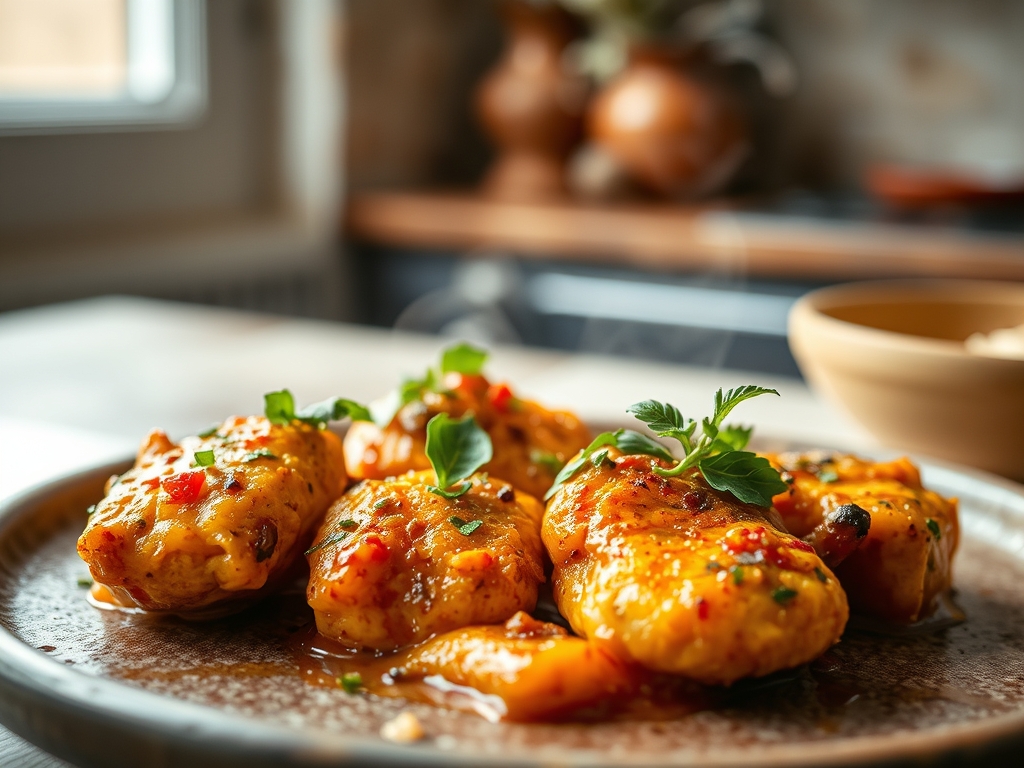
The first crack of mustard seeds hitting hot ghee announces itself like a firecracker, sending black pearls dancing across cast iron while turmeric-stained chicken thighs wait nearby, their skin tightening in anticipation. Across eight regional styles, chicken recipes of india transform a single protein into wildly different expressions of heat, acid, fat, and spice, each dish governed by its own internal logic of marination time, cooking vessel, and finishing technique. This is not fusion or approximation. This is the blueprint for how subcontinental cooks have engineered flavor for centuries, using enzymatic tenderization, controlled charring, and layered aromatics.
The Gathers
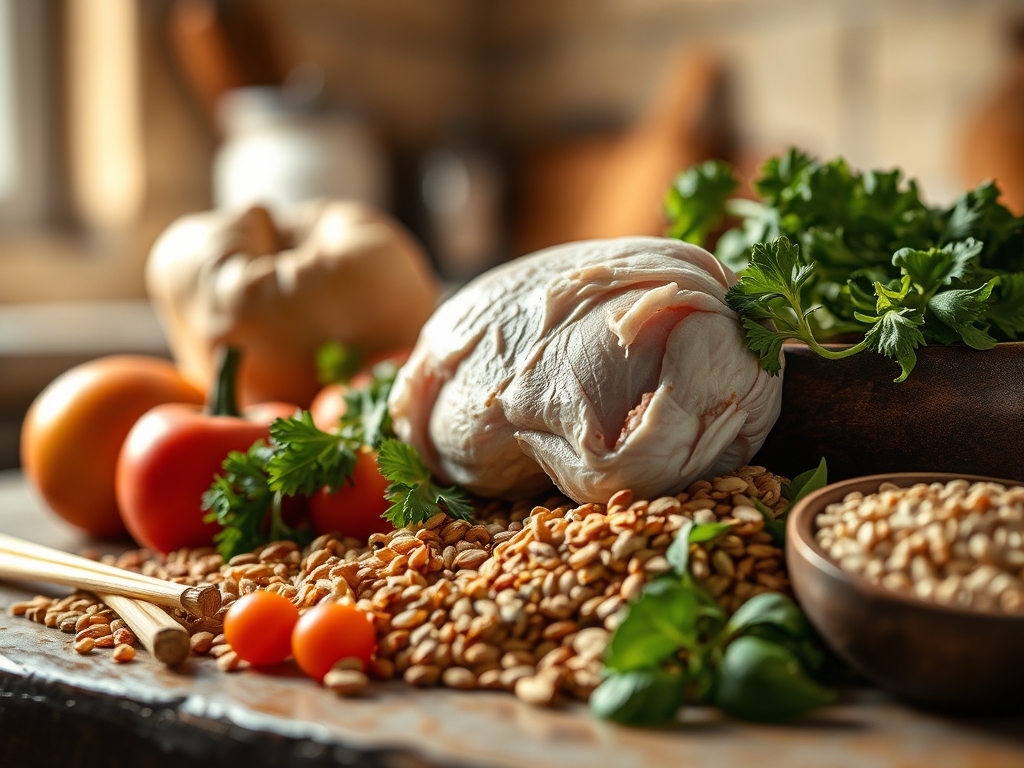
As you see in the ingredient spread below, the raw components form distinct flavor camps. Whole chicken (1.5 kg, cut into 8 pieces) sits at the center, preferably skin-on for Butter Chicken and skinless for Chettinad. Full-fat yogurt (200g, 3.5% milkfat minimum) brings lactic acid for enzymatic breakdown. Ginger-garlic paste (50g total, 1:1 ratio, ground to smooth pulp) contains proteolytic enzymes that soften connective tissue in under 30 minutes.
Kashmiri chili powder (15g) delivers color without aggressive heat (2,000 SHU), while cayenne (5g) adds the punch (30,000-50,000 SHU). Garam masala (10g, freshly ground) should smell of cinnamon and green cardamom, not stale cumin. Tomato puree (400g) provides glutamates and acidity (pH 4.2). Heavy cream (100ml, 35% fat) stabilizes emulsions in northern gravies.
Smart Substitutions: Swap Greek yogurt for hung curd (strain overnight). Replace ghee with mustard oil for Bengali-style dishes. Use coconut milk (full-fat, 400ml) instead of cream for South Indian curries. Tomato passata works if fresh puree is unavailable. Kasuri methi (dried fenugreek, 5g) can substitute for fresh curry leaves in northern recipes but never in southern tadkas.
The Clock
Prep Time: 35 minutes (marinade assembly, spice toasting, onion slicing)
Cook Time: 55 minutes (active searing and simmering)
Total Time: 90 minutes
Chef's Flow: While chicken marinates (minimum 20 minutes, maximum overnight), toast whole spices in a dry pan until fragrant (2 minutes at medium heat), then grind. Slice onions and set near the stove. Bloom ground spices in hot fat before adding liquids to unlock fat-soluble flavor compounds. Sear chicken in batches to maintain pan temperature above 160°C, ensuring Maillard browning. Deglaze between batches to capture fond.
The Masterclass
Step 1: Marinate the Protein
Combine yogurt, ginger-garlic paste, Kashmiri chili, turmeric (3g), and salt (8g) in a non-reactive bowl. Coat chicken pieces thoroughly, ensuring paste contacts all surfaces. Refrigerate 20 minutes minimum.
Chef's Secret: Yogurt's lactic acid denatures surface proteins, creating a "sticky" exterior that holds spices during cooking. Temperature matters: marinate at 4°C to slow bacterial growth, but bring to room temp 10 minutes before cooking for even heat penetration.
Step 2: Sear in Batches
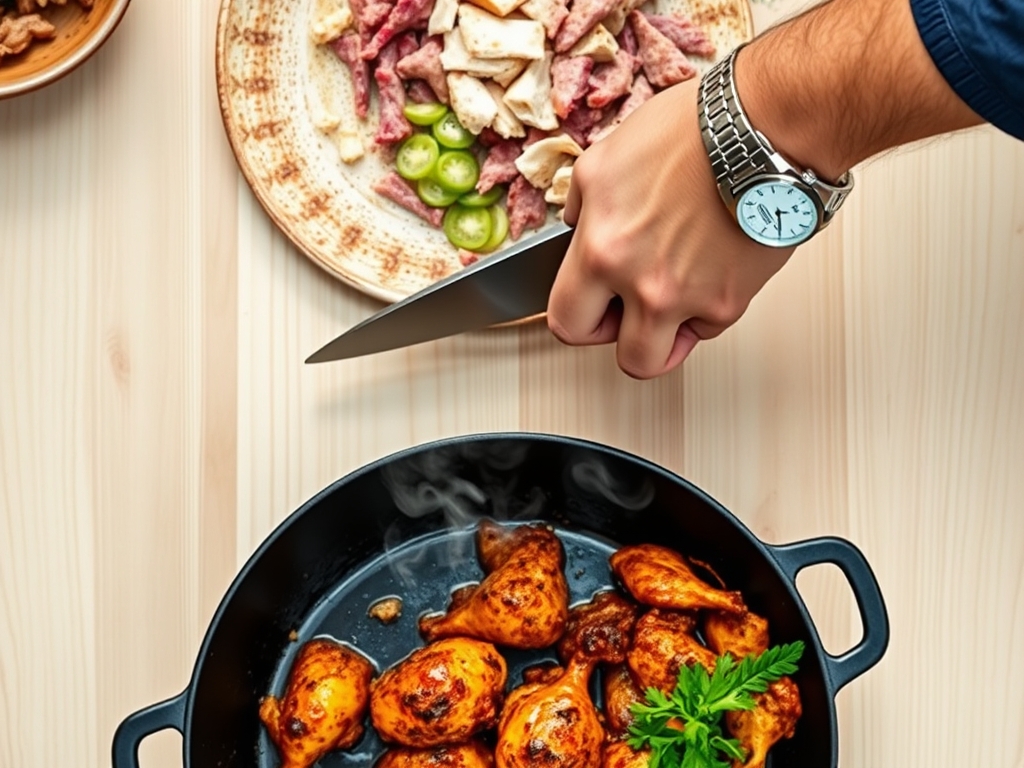
Heat ghee (30ml) in a heavy-bottomed pan over medium-high (180°C). Sear chicken skin-side down, 4 minutes per side, until golden-brown crust forms. Remove and reserve.
Why it Works: Note the texture shown in the step-by-step photos. The Maillard reaction begins at 140°C, producing hundreds of flavor compounds (pyrazines, furans). Batch-searing prevents steam accumulation, which drops pan temperature and causes stewing instead of browning.
Step 3: Build the Base
In the same pan, add sliced onions (300g) and cook until jammy and caramel-edged (12 minutes). Stir frequently to prevent scorching. Add garam masala, coriander powder (8g), and cumin (5g). Toast 90 seconds.
Chef's Secret: Onions contain 5% natural sugars. Slow caramelization concentrates these into complex sweetness (fructose browning at 110°C), which balances chili heat. Bloom spices in residual fat to activate volatile oils.
Step 4: Introduce Tomato and Simmer
Pour tomato puree into the pan. Simmer 8 minutes until oil separates at the edges (visible red-orange slick). Return chicken. Add water (200ml) to achieve desired gravy consistency.
Why it Works: Oil separation signals that tomato's water content has evaporated, concentrating umami glutamates by 40%. Pectin in tomatoes also thickens the sauce naturally. Simmer at 85-90°C (just below boiling) to keep chicken tender.
Step 5: Finish with Dairy and Aromatics
Reduce heat to low. Stir in heavy cream. Simmer 5 minutes. Garnish with kasuri methi and fresh coriander (15g).
Chef's Secret: Add cream off high heat to prevent curdling. Casein proteins in cream destabilize above 85°C in acidic environments. Kasuri methi contains diosgenin, a bitter compound that cuts richness.
Nutritional Info
Per serving (1/4 recipe, ~350g):
Calories: 520 kcal
Protein: 42g
Fat: 34g (saturated: 18g)
Carbohydrates: 14g (fiber: 3g, sugars: 8g)
Sodium: 680mg
The protein-to-fat ratio supports satiety. Turmeric provides curcumin (anti-inflammatory). Yogurt adds probiotics if not overheated.
Dietary Swaps
Keto: Omit onions and tomatoes. Use bone broth instead of water. Increase ghee to 50ml. Net carbs drop to 4g per serving.
Vegan: Substitute chicken with cauliflower florets (600g) or jackfruit (young, 500g canned). Use coconut yogurt and coconut cream. Nutritional yeast (10g) adds umami depth.
Gluten-Free: Already compliant. Confirm garam masala contains no filler starches. Use tamari if adding soy sauce for color.
Serving & Presentation
Plating Idea 1: Serve in a shallow copper bowl. Drag cream across the surface with a spoon back. Garnish with edible flowers and microgreens.
Plating Idea 2: Plate over saffron-infused basmati rice molded in a ring. Pool gravy around the base. Top chicken with gold leaf and fried curry leaves.
Plating Idea 3: Family-style in a cast-iron karahi. Serve with warm naan stacked vertically in a cloth napkin. Place small bowls of pickled onions and mint chutney alongside.
The Pro-Dodge
Pitfall 1: Watery gravy. Fix: Simmer uncovered longer or add cashew paste (50g soaked, blended smooth) for body.
Pitfall 2: Rubbery chicken. Fix: You overcooked it. Internal temp should hit 74°C, then rest 5 minutes for carryover to 77°C. Use an instant-read thermometer.
Pitfall 3: Bitter aftertaste. Fix: You burned the spices during blooming. Use medium heat, stir constantly, and bloom for no more than 90 seconds.
The Meal Prep Corner
Cool gravy rapidly by spreading in a shallow container. Refrigerate up to 4 days in airtight glass containers. Freeze up to 3 months. Reheat gently in a covered pan at low heat, adding 30ml water or cream to restore consistency. Avoid microwaving at full power, which toughens protein. Use 50% power, stirring every 2 minutes.
Rice and naan freeze separately. Reheat rice by sprinkling with water and steaming. Refresh naan in a hot dry skillet, 30 seconds per side.
The Wrap-Up
Eight dishes, one protein, infinite respect for regional technique. Master the core principles (marination chemistry, heat control, spice layering), and every chicken recipe of india becomes an exercise in controlled deliciousness. Your kitchen now holds the keys to Butter Chicken's velvet gravy, Chettinad's roasted-spice intensity, and Tandoori's smoky char. Cook these, share photos, tag your wins, and drop your family's secret ingredient in the comments below.
The Kitchen Table
Q: Can I use chicken breast instead of thighs?
A: Yes, but reduce cook time by 8 minutes. Breasts dry out faster due to lower fat content (3% vs. 10% in thighs). Marinate longer (1 hour minimum) and check internal temp at 72°C.
Q: Why does my yogurt curdle in the gravy?
A: Yogurt curdles when added to high-acid environments above 80°C. Stabilize it first: whisk yogurt with 5g chickpea flour (besan) before adding. Alternatively, temper yogurt by adding warm gravy to it slowly, then pour back into the pan.
Q: What's the difference between garam masala and curry powder?
A: Garam masala is a North Indian blend (cinnamon, cardamom, cloves, black pepper) added at the end for warmth. Curry powder is a British invention with turmeric, coriander, and fenugreek, cooked early. They're not interchangeable.
Q: How do I get restaurant-style smoky flavor at home?
A: Use the dhungar method. After cooking, place a small steel bowl in the center of the curry. Add a hot charcoal piece, drizzle 5ml ghee over it, cover immediately for 3 minutes. The smoke infuses the gravy.
Q: Can I double this recipe?
A: Yes, but sear chicken in smaller batches to maintain pan temp. Don't double the salt or chili until you taste. Spices scale non-linearly. Use a wider pan or two pans simultaneously to avoid steaming.